Quick Answer
There is no universal setback number in East Tennessee: how close you can build to a property line depends on your county or city, your zoning district, your recorded plat, easements crossing the lot, septic clearances, and your HOA. Morales Outdoor Living verifies all of it for your specific parcel during design and pulls the permits.
- Setbacks are set by zoning district, not countywide rules, and front, side, and rear setbacks usually differ; pools and accessory structures may carry different setbacks than the house.
- Utility and drainage easements commonly run along rear and side lot lines, and building inside one risks forced removal at the owner's cost.
- Septic tanks and drain fields require clearances that often constrain a pool or patio layout more than the property line does.
- HOA requirements stack on top of county zoning and require their own approval submittal, which is handled as part of the project.
Is there a standard setback for pools in East Tennessee?
No. Setbacks vary by county, zoning district, and plat, and pools often carry their own placement and barrier rules on top. The only number that matters is the one on file for your parcel.
Who checks setbacks and easements if I build with Morales Outdoor Living?
We do, during design: setbacks, easements, septic clearances, and HOA requirements for your specific parcel, then we pull the permits and schedule inspections.
The Short Answer
There is no single answer, and anyone who gives you one number for all of East Tennessee is guessing. How close you can build to your property line depends on your county or city, your specific zoning district, your recorded plat, any easements crossing your lot, and your HOA if you have one. Rear and side setbacks of several feet to several yards are common in residential zones, but the only number that matters is the one on file for your parcel. Checking it is part of our design process on every project.
What a Setback Actually Is
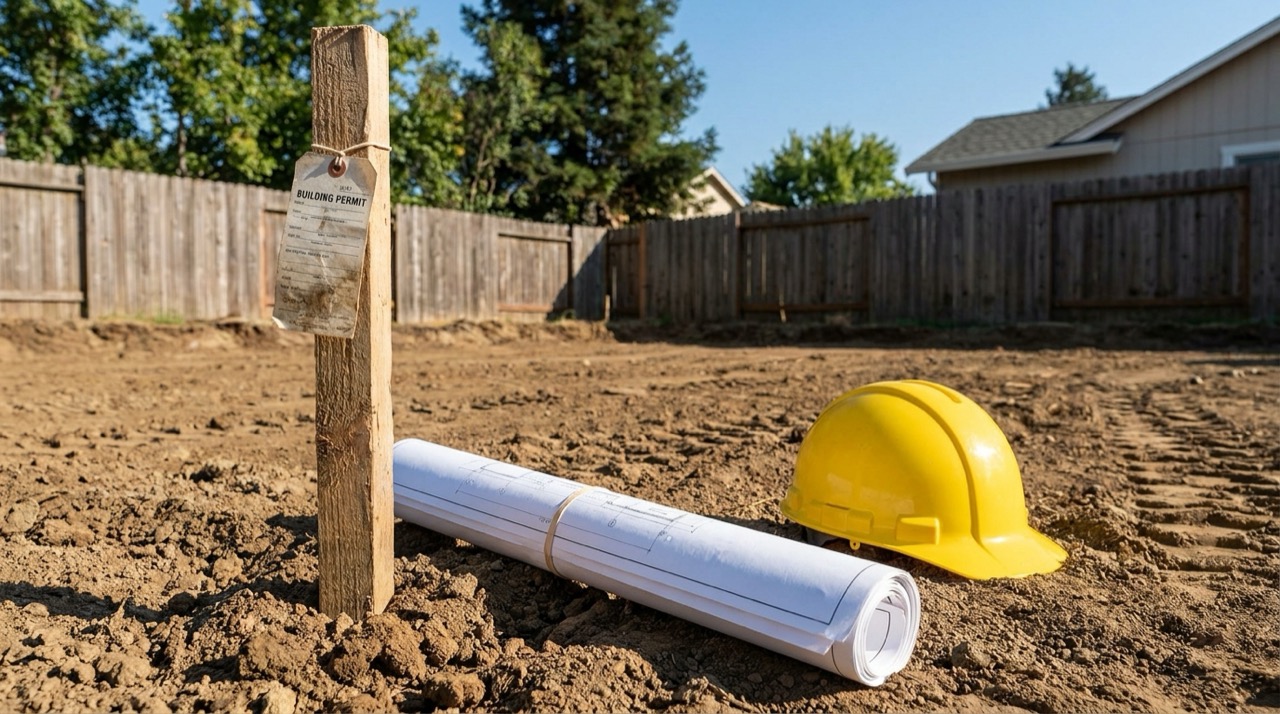
A setback is the minimum distance a structure must keep from a property line, and it is set by your zoning district, not by a countywide rule of thumb. Two houses in the same county, even on the same road, can carry different setbacks because they sit in different districts or were platted under different rules. Front, side, and rear setbacks usually differ from each other too, and some jurisdictions treat pools, decks, and accessory structures differently than the house itself.
That is why the honest process is always the same: pull the plat and the zoning for your parcel and read what applies to your project, not what applied to your neighbor's.
Easements: The Line You Cannot See
Utility and drainage easements commonly run along the rear and sides of residential lots, and they are the most expensive surprise in backyard construction. An easement is a right someone else holds over a strip of your land, and building a pool, wall, or structure inside one risks being forced to remove it at your own cost if the utility ever needs access. Your plat shows them; assuming they are not there does not make them go away. We check for them before a design gets drawn, not after.
Septic Systems Constrain More Than Lines
If your home is on septic, the tank and the drain field push harder on your layout than the property line does. Pools, patios, and structures have to keep required clearances from septic components, and on some lots that constraint decides where the pool can go before setbacks even enter the conversation. It is one of the first things we locate on a site walk.
HOAs Stack Their Own Rules on Top
County approval does not override your HOA. Many East Tennessee neighborhoods add their own setback, screening, height, and approval requirements on top of zoning, and their sign-off is a separate submittal. We handle HOA packets as part of the project, the same way we handle permits.
Pools Add One More Layer
Pools carry their own placement rules: barrier and fence requirements, equipment placement, and in most counties a permit for anything holding more than 24 inches of water. Our county-by-county pool permit guide covers how the paperwork differs across the region, and the Knox County rules are a good example of how specific the requirements get.
How We Handle It
On every pool, deck, patio, or outdoor living project, we verify the setbacks, easements, septic clearances, and HOA requirements for your specific parcel during design, then pull the permits and schedule the inspections. You should never have to interpret a zoning table to get a backyard built, and you should never find out about an easement from a utility crew.
Before You Fall in Love With a Layout
If you are sketching a pool or patio against the back fence right now, the smartest first step is cheap: confirm what your parcel actually allows. Request a free phone consultation and we will check it as part of the site walk, or get an instant estimate to see what the project itself would run while we verify the rest.
Christopher Morales
Co-founder of Morales Outdoor Living. 16+ years designing and building pools, patios, decks, and complete outdoor living spaces across East Tennessee. TN License #77919.
Meet the team