Quick Answer
A big-box pergola kit is a genuinely reasonable choice for a small, freestanding pergola on an existing slab or patio where you mainly want shade definition. Kits fall short on anything larger, anything attached to the house, or anywhere wind, snow load, or long-term durability matter, since they use lighter-gauge material, come in generic sizes, and are generally not engineered per-installation for your specific site and East Tennessee conditions.
- Kit pergolas use lighter-gauge material than a custom structure to hit a shippable, assemble-at-home price point, meaning less resistance to wind and snow load and a shorter usable life before sagging or joint fatigue.
- A retail kit is generally not engineered per-installation for your specific span or East Tennessee wind and winter conditions, while a custom structure from a permitting builder is engineered and typically reviewed against local load requirements.
- Kit warranties typically cover manufacturing defects in the parts, not the installation, engineering, or structural performance once it is in your yard.
- Attaching a kit to the house is a load-bearing connection similar to a deck ledger, and most kit installations attached to a house are done without a permit or engineering review of that connection.
- A custom open, slatted wood pergola runs $9,000 to $22,000 depending on size, footings, and finish.
Is a pergola kit good enough, or should I go custom?
A kit is a defensible choice for a small, freestanding pergola on an existing slab. Custom is the honest recommendation for anything attached to the house, larger than a modest footprint, or where real wind and snow performance matters.
Can I attach a big-box pergola kit to my house?
It is usually done without a permit or engineering review, even though the connection is load-bearing, similar to a deck ledger. That is a real liability and can become an issue at resale.
The Short Answer
A big-box pergola kit is a genuinely reasonable choice in some situations, and we are not going to pretend otherwise just because we build custom structures. It tends to work well for a small, freestanding pergola sitting on an existing concrete slab or paver patio, where you mostly want shade definition rather than serious structural performance. Where kits fall short is on anything larger, anything attached to the house, or anywhere wind, snow load, or long-term durability actually matter. Here is the honest breakdown.
When a Kit Is Genuinely Fine
If you have a small patio, a simple rectangular footprint, a slab or paver base already in place, and you want a freestanding structure mainly for visual shade and definition rather than heavy structural duty, a kit can be a sensible, budget-friendly option. It is fast, it is a known price, and for a modest space that is not carrying much load or spanning a big distance, the lighter materials are less of a liability.
Where Kits Fall Short
Lighter-Gauge Material
Kit pergolas, whether wood or aluminum, are generally built from lighter-gauge material than a custom structure, because the kit has to ship flat, assemble with basic tools, and hit a specific retail price point. That is a real engineering trade-off, not a marketing detail. Lighter material means less resistance to wind loading, less resistance to the weight of accumulated snow or ice, and generally a shorter usable life before sagging or fatigue shows up at the joints.
Generic Sizing
A kit comes in a fixed set of sizes. Your patio, your house, and your yard do not care what sizes the manufacturer offers, and a kit that is close enough to your space is not the same as a structure sized and positioned for it. You often end up compromising the footprint, the post spacing, or the placement relative to doors and windows to fit a size that was designed for a generic backyard, not yours.
No Engineering for Wind or Snow
This is the biggest honest gap. A custom-built structure from a builder who pulls permits is engineered and, in most jurisdictions, reviewed against local wind and snow load requirements for your specific structure and span. A retail kit is generally not engineered per-installation for your specific site, your specific span, or East Tennessee's specific wind and winter conditions. For a small, low structure that is a manageable risk. For anything larger, taller, or in a more exposed part of the yard, it is a real structural gap.
Warranty That Covers Parts, Not the Install
Kit warranties typically cover manufacturing defects in the parts themselves, not the installation, and definitely not engineering or structural performance once it is in your yard. If a kit pergola sags, racks, or fails at a joint after a few years of wind and weather, that is very often outside what the warranty actually covers, because the manufacturer's responsibility ended when the parts shipped correctly.
Attaching to the House Is Usually Unpermitted
A lot of homeowners want a pergola attached to the house rather than freestanding, and this is where kits get genuinely risky. Attaching a structure to your house is a load-bearing connection, similar in principle to a deck ledger, and it generally should go through the same permitting and structural attention a deck ledger gets. Most kit installations attached to a house are done without a permit and without engineering review of that connection, which is a real liability if that attachment ever fails, or if it becomes a problem at resale when a buyer's inspector notices an unpermitted structural attachment to the house.
What Custom Actually Buys You
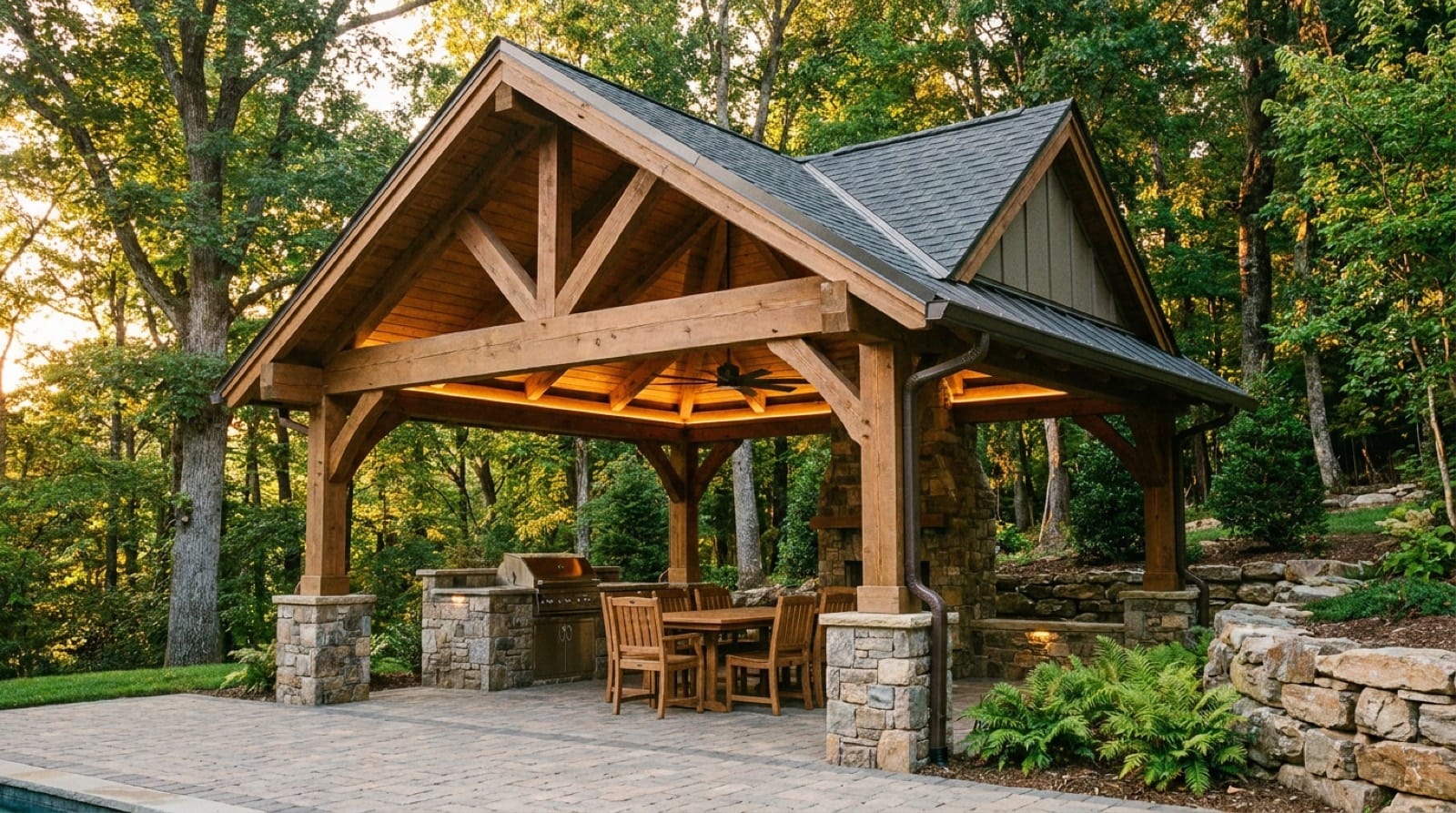
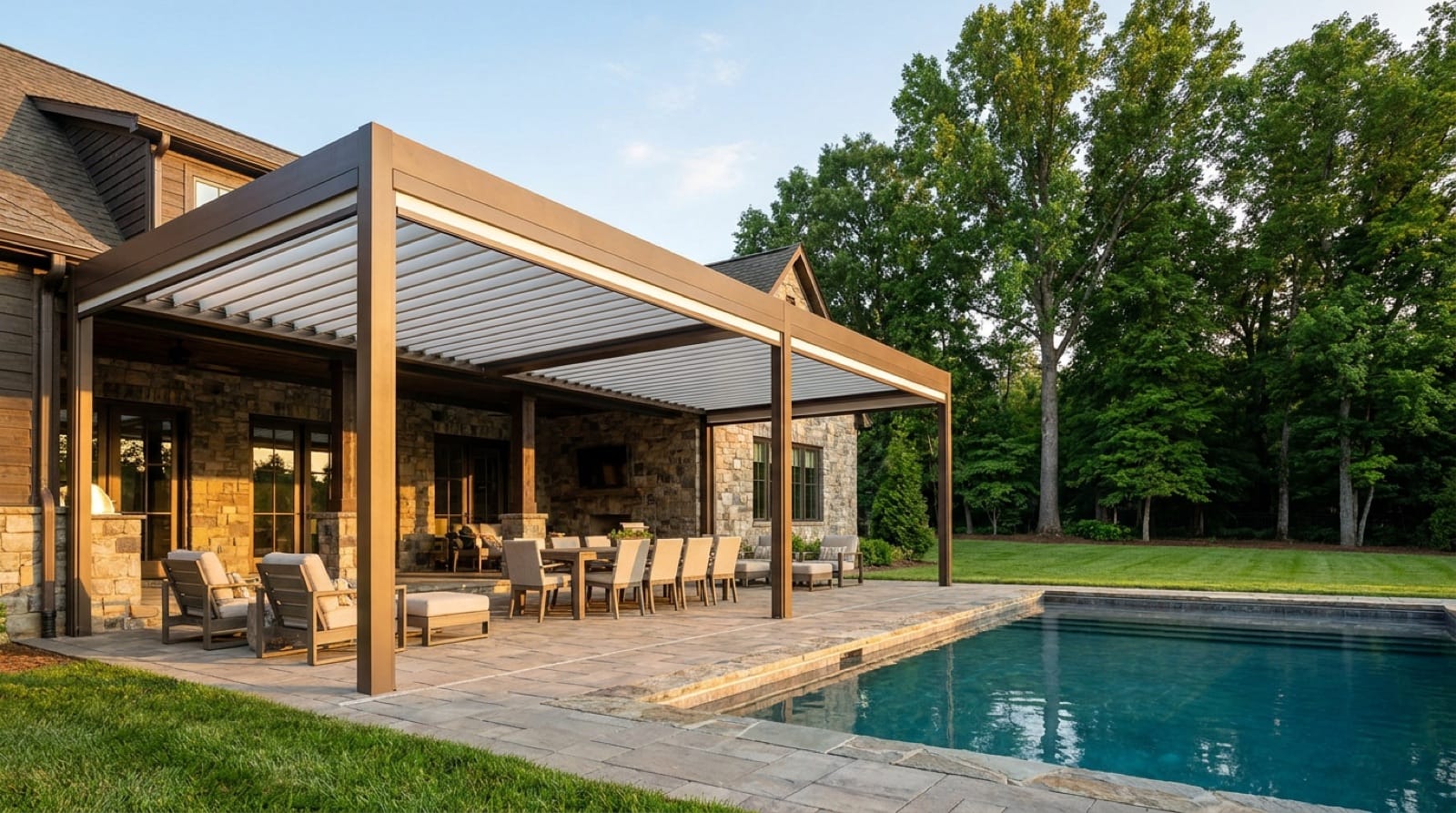
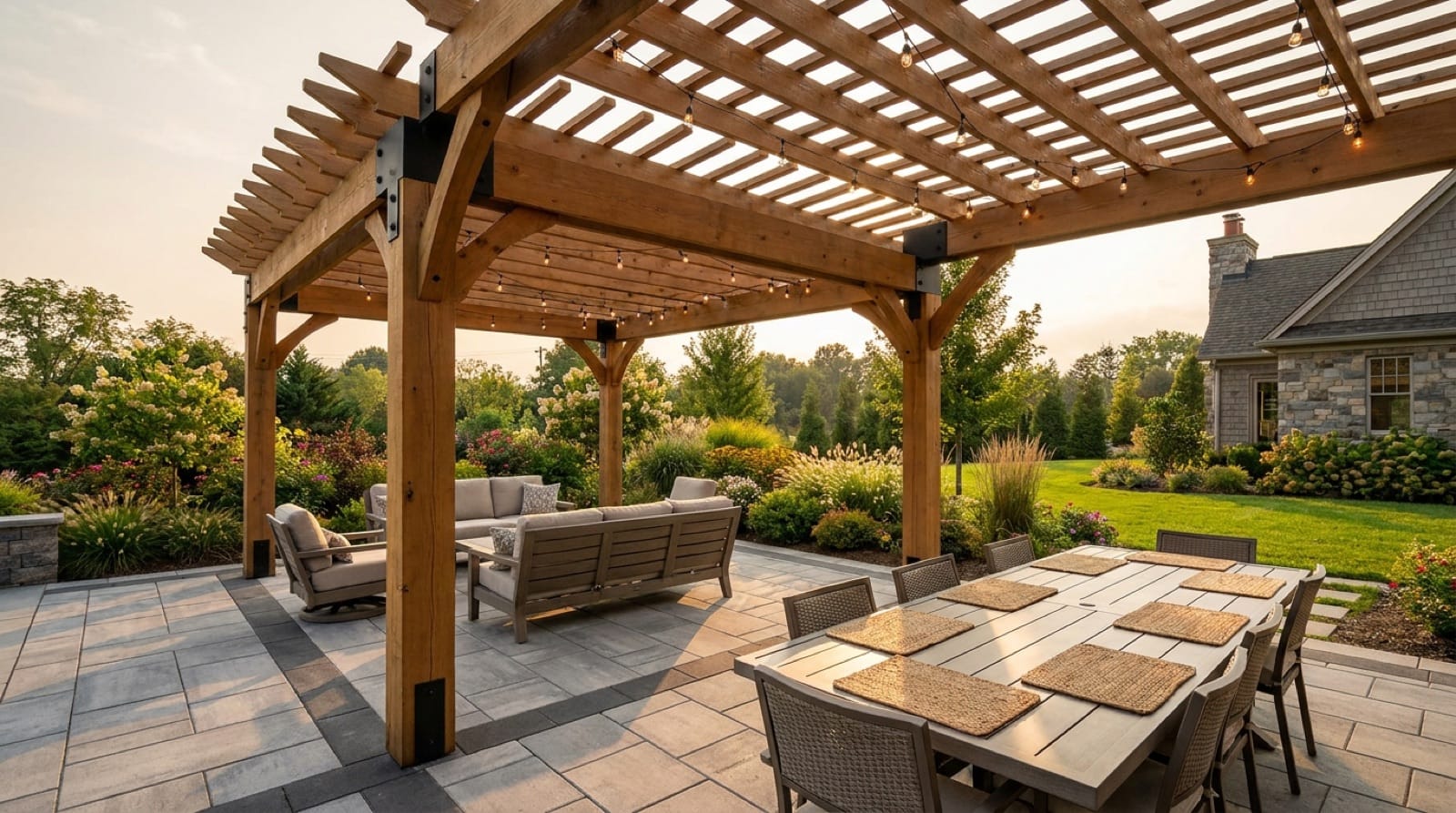
A custom-built pergola is sized to your actual space, engineered for the structure and span you are building, uses heavier-gauge material sized for real wind and snow performance, and, when attached to the house, is designed and typically permitted the same way a deck ledger would be. You are also choosing your own footprint, post placement, and roof style rather than picking from a fixed catalog. That is the trade-off in plain terms: a kit is faster and cheaper for a small, simple, freestanding structure, custom costs more but is built and engineered for your actual space and load conditions.
What It Costs
An open, slatted cedar or wood pergola from us runs $9,000 to $22,000 depending on size, footings, and finish. That is a real range for a properly engineered, custom-sized structure, not a kit price, and it reflects footings, post bases, and structural framing sized to the job rather than a generic kit size. If you are also weighing wood against aluminum for long-term durability, our aluminum versus wood pergola comparison is the natural next read, and our pergola cost guide breaks the pricing down further.
The Honest Recommendation
If your space is small, freestanding, and sitting on an existing slab, a kit is a defensible choice and we will not talk you out of it. If you are attaching to the house, building anything larger than a modest footprint, or you want something that performs well in real wind and snow years down the road, custom is the honest recommendation, not because we sell it, but because that is where the engineering gap actually matters. See our full pergolas page for what a custom build includes.
Talk Through Your Specific Yard
Every yard is different, and the right call depends on your actual space and what you are attaching it to. Request a free estimate and we will give you an honest read on whether a custom structure is worth it for your project, or get in touch with questions.
Christopher Morales
Co-founder of Morales Outdoor Living. 16+ years designing and building pools, patios, decks, and complete outdoor living spaces across East Tennessee. TN License #77919.
Meet the teamLike this guide? Add Morales Outdoor Living as a preferred source on Google.