Quick Answer
Yes, sloped lots are common in East Tennessee and do not rule out a pool. Slope adds engineering such as retaining walls, geogrid, and engineered backfill, which raises cost, but gunite in particular can be built into steep grades, and a view lot's slope can even become a vanishing edge pool.
- Standalone retaining wall projects in East Tennessee run $8,000 to $150,000+, depending on height, length, and material.
- Sloped lots often need engineered backfill and geogrid-reinforced retaining walls so the pool and pad never shift over time.
- Gunite is built and engineered on-site, which often makes it the better fit for severe slopes, while fiberglass shells need carefully engineered backfill and wall support to handle a slope.
- Walkout-basement lots, common in East Tennessee foothills, often provide a natural lower grade for a pool and deck away from the house.
Can a pool be built on a steep East Tennessee lot?
Yes. Steep lots usually need retaining walls and engineered backfill, and gunite pools in particular can be engineered directly into severe grades.
Does a sloped lot make a pool more expensive?
Generally yes, because retaining walls, extra excavation, and engineered backfill add real cost, though a view lot's slope can also be used to create a vanishing edge pool.
The Short Answer
Yes. In fact, if your lot were perfectly flat, that would be the unusual one for East Tennessee. Most of the yards we build in have real grade to them, and a sloped lot does not rule out a pool. It changes how the pool gets engineered and what it costs, but slope itself is normal here, not a dealbreaker.
Why Almost No Lot Around Here Is Flat
Knoxville, Farragut, and the surrounding foothills sit in rolling terrain, with ridge lines, valley lots, and lake property all through the area. A truly flat backyard is the exception, not the rule. We walk sloped sites constantly, and a good builder treats slope as a normal design input, not a surprise to bill you for later.
What a Sloped Lot Actually Requires
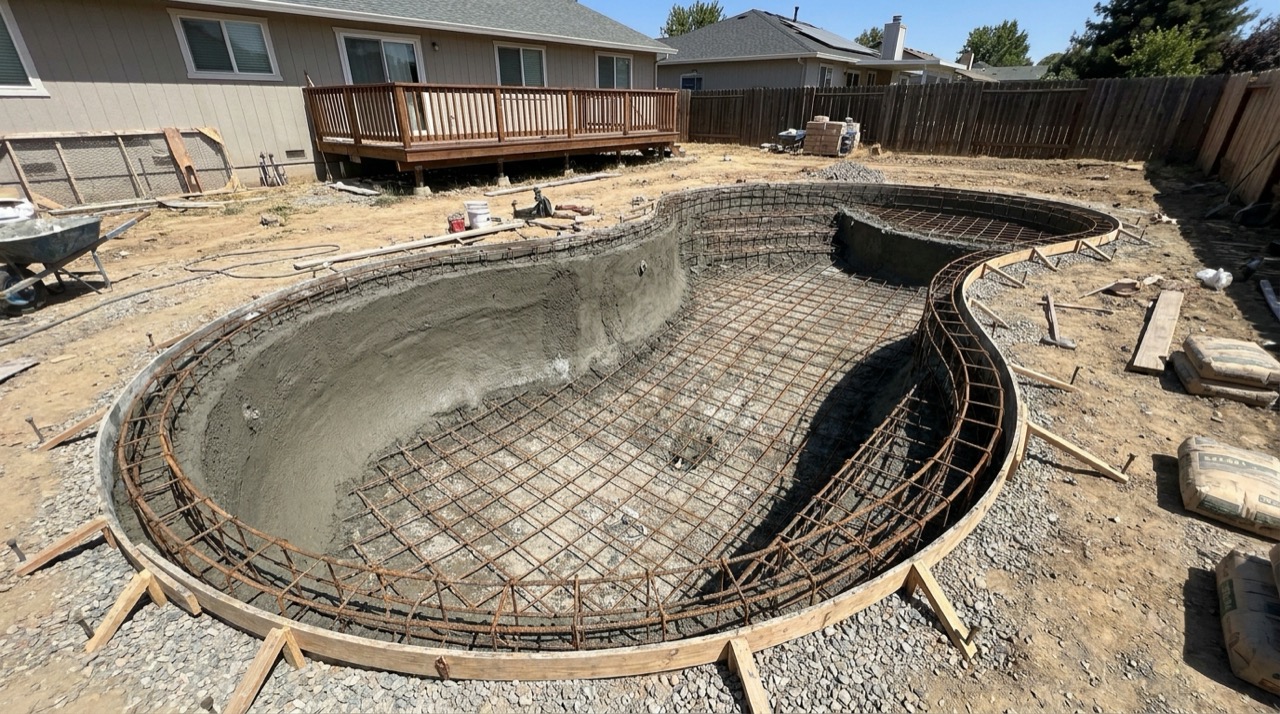
Building on a slope is not just "dig a hole." It usually means some combination of:
- Retaining walls to hold back the high side of the yard and create a level pad for the pool and decking
- Geogrid reinforcement behind taller walls, so the soil stays put through our wet winters and spring rains
- Engineered backfill around the shell, compacted in the right lifts so the pool never settles or shifts over time
- A rock excavation contingency, because East Tennessee ledge does not care what your grading plan says
Skip any of these to save money upfront, and you are buying a problem that shows up in year three or four, not on day one.
Walkout Basement Lots Are a Common Fit
Many of the sloped yards we work in have a walkout basement, where the ground steps down from the house. These lots often work well for a pool because the natural grade already creates a lower level, away from the house, for the pool and deck. It still needs proper wall and drainage engineering, but the slope itself is rarely the obstacle homeowners assume it is.
The Upside: Slope Can Be an Asset
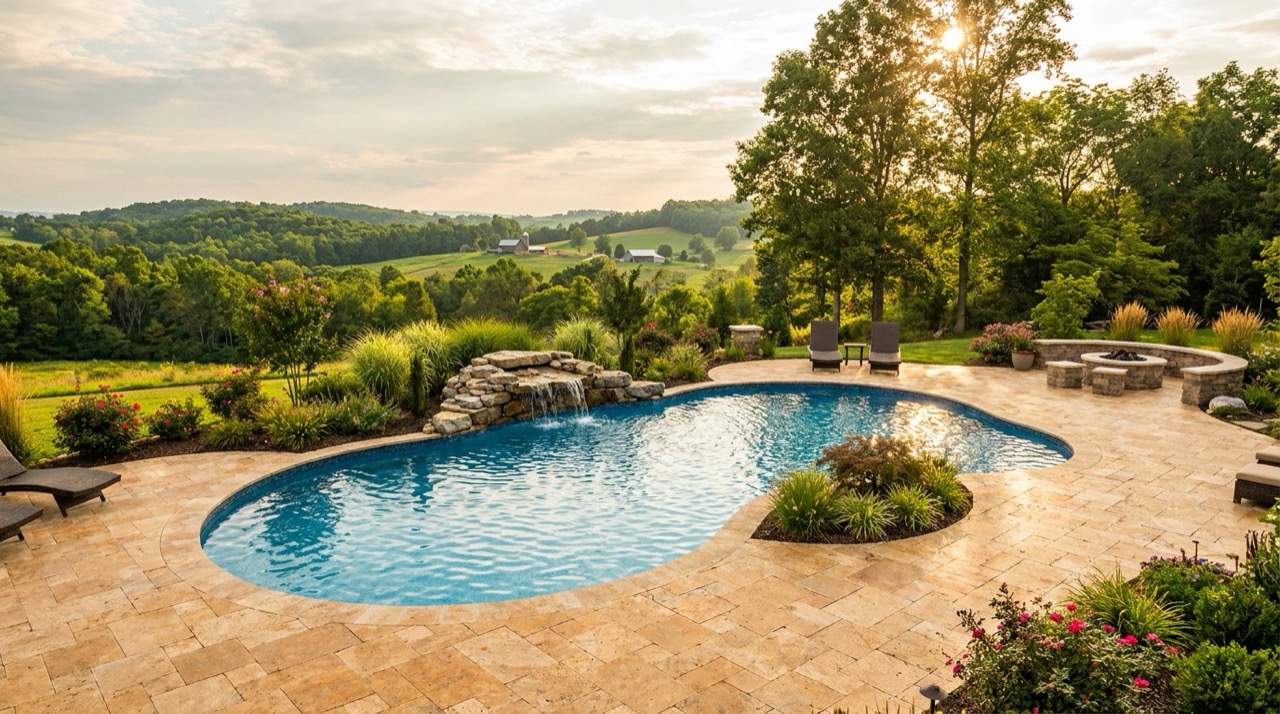
If your lot has a view, a ridge, a valley, or water, slope is actually an opportunity. A vanishing edge (also called an infinity edge) uses the natural drop in elevation to visually blend the pool with the view beyond it. Some of the best-looking pools we build sit on the exact lots that would scare off a less experienced builder.
Why Slope Raises the Price
Retaining walls, extra excavation, and engineered backfill all cost real money, so a sloped lot generally costs more to build on than a flat one. As a standalone project, retaining walls alone run $8,000 to $150,000+, depending on height, length, and material, and a steep lot may need one before the pool work even starts. We would rather tell you that upfront than let a low, incomplete quote surprise you mid-project.
Fiberglass vs. Gunite on a Slope
Both pool types can work on sloped lots, but they handle slope differently.
Gunite is built in place and engineered specifically for your soil and grade, which often makes it the more natural fit for a severe slope. The shell, the steel, and the retaining structure around it can all be designed together as one system.
Fiberglass can go on a sloped lot too, but the shell arrives pre-built, so the engineering has to happen around it: a properly designed wall, and backfill compacted evenly so the shell is supported the way it was designed to be. On a mild to moderate slope this is routine. On a very steep or complicated site, gunite sometimes fits better. We will tell you honestly which is right for your yard in our full fiberglass vs. gunite comparison.
How We Approach a Sloped Lot
Every sloped-lot project starts with an on-site walk, not a guess from a satellite photo. We look at the grade, probe for rock, and figure out what retaining and backfill work the site actually needs before we hand you a number. That is also how we avoid the change orders that make sloped-lot pools look "expensive," when really the first quote was just incomplete.
If you have a hilly lot and have been told a pool is not possible, or been quoted with retaining walls buried in a vague line item, get a straight answer. Get an instant estimate, browse real builds on sloped East Tennessee lots, or request a free phone consultation and we will walk your yard and tell you exactly what it needs.
Christopher Morales
Co-founder of Morales Outdoor Living. 16+ years designing and building pools, patios, decks, and complete outdoor living spaces across East Tennessee. TN License #77919.
Meet the team