Quick Answer
A well-built gunite pool lasts 30 to 50 years, but as concrete and plaster it has real quirks: surface cracks, plaster wear, algae in the porous finish, and higher maintenance than fiberglass. Most of these trace back to a rushed shell, bad soil prep, or skipped steel, which is why proper reinforcement, correctly applied gunite, and engineering for your specific soil and slope are what actually prevent them.
- Plaster typically lasts 10 to 15 years before it needs refinishing; pebble or quartz finishes last 15 to 25 years before that wear shows up as roughness, staining, or etching.
- Gunite's porous plaster lets algae take hold more easily than a smooth fiberglass surface, especially if water chemistry drifts, so proper circulation, equipment sizing, and maintenance guidance matter.
- The honest tradeoff is maintenance: gunite generally uses more chemicals and brushing than fiberglass, so a homeowner prioritizing low maintenance may fit fiberglass better.
- Most gunite horror stories trace back to a builder who rushed the shell, soil prep, or plumbing, since concrete is unforgiving of shortcuts.
How long does a gunite pool actually last if it is built right?
A well-built gunite pool can last 30 to 50 years, longer than almost any other pool type.
Is gunite higher maintenance than fiberglass?
Yes, that is the honest tradeoff: more chemicals and brushing in exchange for unlimited design freedom and long-term durability.
Gunite Is Built to Last, Not to Be Ignored
A well built gunite pool can last 30 to 50 years, longer than almost any other pool type. But gunite is concrete and plaster, and both have real world quirks. Here is an honest look at what can go wrong and how we prevent each one.
1. Surface Cracks
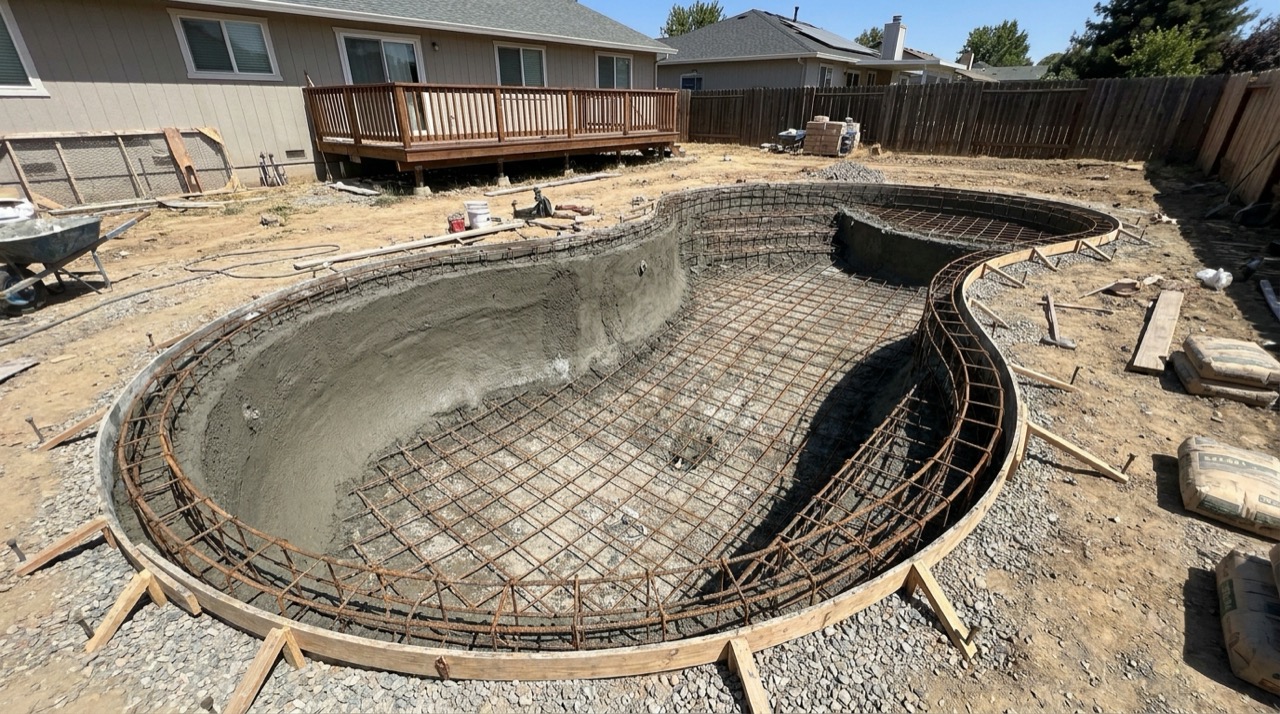
Gunite shells can develop surface cracks. Most are cosmetic "check" cracks in the plaster; the serious ones are structural and trace back to a poorly engineered shell, bad soil prep, or skipped steel.
How we prevent it: proper steel reinforcement, correctly mixed and applied shotcrete, and engineering for your specific soil and slope. The shell is the foundation of the whole pool, so we do not cut corners on it.
2. Plaster and Finish Wear
Plaster is a wear surface. It typically lasts 10 to 15 years before it needs refinishing, and pebble or quartz finishes last 15 to 25. Rough spots, staining, and etching come from age plus water chemistry.
How we prevent it: quality finishes installed correctly, and we teach you the water chemistry basics at handoff so your finish ages slowly and evenly.
3. Algae in the Plaster
Plaster is porous, so algae can take hold more easily than on a smooth fiberglass surface, especially if chemistry drifts.
How we prevent it: good circulation and equipment sizing during design, plus maintenance guidance. It is very manageable; millions of gunite pools stay crystal clear.
4. Higher Maintenance Than Fiberglass
This is the honest tradeoff. Gunite generally uses more chemicals and a bit more brushing than fiberglass. You are buying unlimited design freedom and longevity, not the lowest maintenance.
How we set expectations: if low maintenance is your top priority, we will tell you fiberglass might fit better. See our honest fiberglass versus gunite breakdown.
5. Rushed or Inexperienced Construction
Most gunite horror stories come down to a builder who rushed the shell, the soil prep, or the plumbing. Concrete is unforgiving of shortcuts.
How we prevent it: we build to a standard, manage the crew directly, and keep you in the loop the whole way through JobTread.
The Takeaway
Gunite rewards doing it right. Built properly on a sound base with quality finishes, it is the pool that is still beautiful in 40 years. Get an estimate, read the gunite pool cost guide, or request a free phone consultation.
Christopher Morales
Co-founder of Morales Outdoor Living. 16+ years designing and building pools, patios, decks, and complete outdoor living spaces across East Tennessee. TN License #77919.
Meet the teamLike this guide? Add Morales Outdoor Living as a preferred source on Google.