Quick Answer
Artificial turf does get warmer than natural grass in direct summer sun, the same way a patio or driveway does. In an East Tennessee July it can feel hot to bare feet in full sun, but it cools fast with shade or a quick rinse, and infill choice and layout make a big difference.
- Turf in full afternoon sun gets warmest; turf in shade stays close to air temperature.
- A quick rinse with a hose drops the surface temperature fast and is the simplest fix.
- Cooling infills and lighter, higher-quality turf manage heat better than cheap, dark turf.
- Planning shade from a pergola, pavilion, or tree over high-use areas keeps that turf much cooler.
How do you cool down artificial turf?
A quick rinse with a hose cools it within minutes. For lasting relief, plan shade over high-use areas and ask about cooling infill.
Is turf too hot to use in summer?
Only for a few hours on the sunniest afternoons, and a rinse or shade handles it. For most homeowners it is a manageable tradeoff for a no-mow, no-mud lawn.
The Honest Answer
Artificial turf does get warmer than natural grass in direct summer sun. That is simply physics: a synthetic surface absorbs heat that a living, transpiring lawn does not. In the peak of an East Tennessee July, turf in full sun can feel hot to bare feet for the same reason a patio, a pool deck, or a driveway does. The good news is that it cools quickly in shade or with a quick rinse, and there are real ways to manage it.
We would rather tell you this straight than have it be a surprise. Here is what actually matters and what you can do.
What Affects How Hot It Gets
- Sun exposure: turf in full afternoon sun gets warmest; turf in shade stays close to air temperature.
- Infill: the type and color of infill affects heat retention. Some newer infills are designed to run cooler.
- Color and quality: lighter, higher-quality turf with better backing tends to manage heat better than cheap, dark turf.
- Airflow: open areas with a breeze shed heat faster than enclosed, still spaces.
Practical Ways to Keep It Comfortable
- A quick rinse with a hose drops the surface temperature fast and is the simplest fix on a hot day.
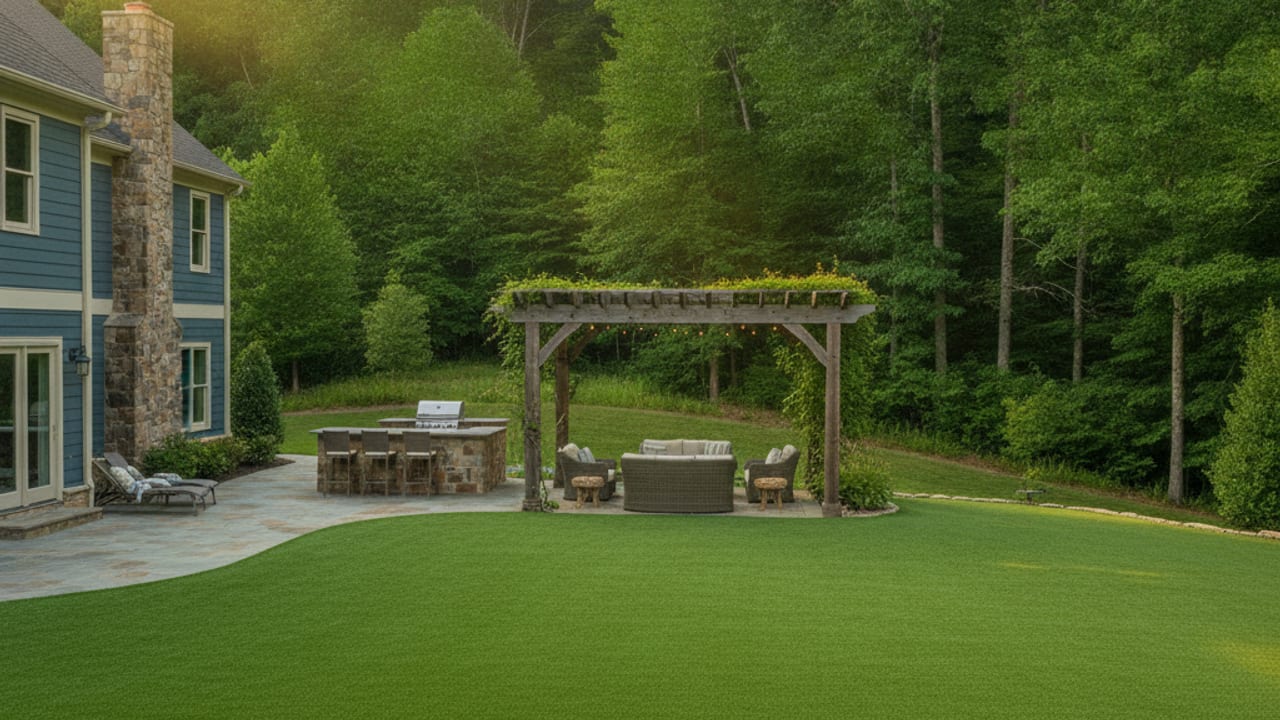
- Shade helps a lot. A pergola, pavilion, or nearby tree over a play or lounge area keeps that turf far cooler.
- Cooling infills are worth asking about for play areas and pet runs where bare feet and paws are in constant contact.
- Smart placement: we can plan the layout so the most-used turf areas fall where afternoon shade lands.
Why It Is Still Worth It
For most homeowners, summer heat is a manageable tradeoff for everything turf delivers: no mowing, no muddy spots, no watering, and a clean green surface year-round. The hottest stretch is a few hours on the sunniest afternoons, and a rinse or a shade structure handles it. We break down the bigger picture in is artificial turf worth it.
If heat is a top concern, that is a design conversation, not a dealbreaker. The infill, the turf product, and the shade plan all give us levers to pull.
Let's Plan Turf That Stays Comfortable
The right product, infill, and layout make a real difference in how your turf feels in summer. Tell us how you will use the space or get an instant estimate, and we will spec turf and shade that work together for our climate. See the full breakdown in the turf cost guide.
Christopher Morales
Co-founder of Morales Outdoor Living. 16+ years designing and building pools, patios, decks, and complete outdoor living spaces across East Tennessee. TN License #77919.
Meet the team