Quick Answer
Vinyl liner pools have the lowest upfront cost of the three main pool types, but the liner is a wear item that typically needs replacement every 6 to 12 years, a recurring cost fiberglass and gunite owners do not have. Fiberglass is a single pre-manufactured shell with no liner to ever replace; gunite offers the most design freedom and typically the highest resale value, built on-site with an interior finish that eventually needs renewal on a longer cycle than a vinyl liner.
- Vinyl liners typically need replacement every 6 to 12 years, and the liner can also puncture from things like dog nails or a tree root pressing from underneath.
- Fiberglass is a single pre-manufactured gelcoat shell with no liner to replace, ever, and a smooth surface that resists staining and algae better than vinyl typically does.
- Gunite is built on-site from steel and concrete with an applied plaster, quartz, or pebble finish, offering the most design freedom and typically the highest resale value.
- Fiberglass runs $80,000 to $190,000+ installed and gunite runs $95,000 to $350,000+ installed in the East Tennessee market.
Is vinyl liner cheaper than fiberglass or gunite?
Yes, vinyl has the lowest upfront construction cost of the three, but the liner typically needs replacing every 6 to 12 years, which is a recurring cost to budget for over the life of the pool.
Which pool type has no liner to replace?
Fiberglass. It is a single pre-manufactured shell with no liner, while gunite uses an applied interior finish that eventually needs renewal on a longer cycle than a vinyl liner.
The Short Answer
We do not install vinyl liner pools. We build fiberglass and gunite. That is not a knock on vinyl, it is a disclosure, and it is exactly why this comparison can be more honest than one from a builder trying to sell you all three. Vinyl has one real, legitimate advantage: it is the lowest upfront cost of the three by a meaningful margin. It also has real, recurring costs that a lot of vinyl sales conversations gloss over. Here is the straight version.
What Vinyl Actually Does Well
Vinyl liner pools earn their popularity honestly. The upfront construction cost is typically the lowest of the three main pool types, which makes vinyl the way a lot of families get into pool ownership at all. The shell can also be built in a wide range of shapes and sizes, closer to gunite's flexibility than to fiberglass's fixed-mold limitations, without gunite's price tag. For a homeowner whose top priority is the lowest possible entry cost and who is comfortable with an ongoing maintenance relationship with the pool, vinyl is a legitimate choice, not a lesser one.
What Vinyl Actually Costs Over Time
Here is the part that matters most and gets talked about least in a sales pitch: the liner itself is a wear item, not a permanent surface. A vinyl liner typically needs replacement every 6 to 12 years, and that is a real, recurring cost that has to be budgeted for over the life of the pool, on top of the original construction price. A liner can also puncture from something as ordinary as a dog's nails, a dropped pool toy with a sharp edge, or a tree root pressing from underneath, and while a puncture is patchable, it is a real risk that fiberglass and gunite owners simply do not have to think about. Liners also fade and can develop wrinkles over time as they age, which is a cosmetic issue but a real one if you care how your pool looks a decade in.
The honest way to think about vinyl's total cost of ownership is that the lower entry price is real, but it is not the whole story, because you are trading a lower day-one number for a recurring liner-replacement expense every several years for as long as you own the pool.
Where Fiberglass and Gunite Differ From Vinyl
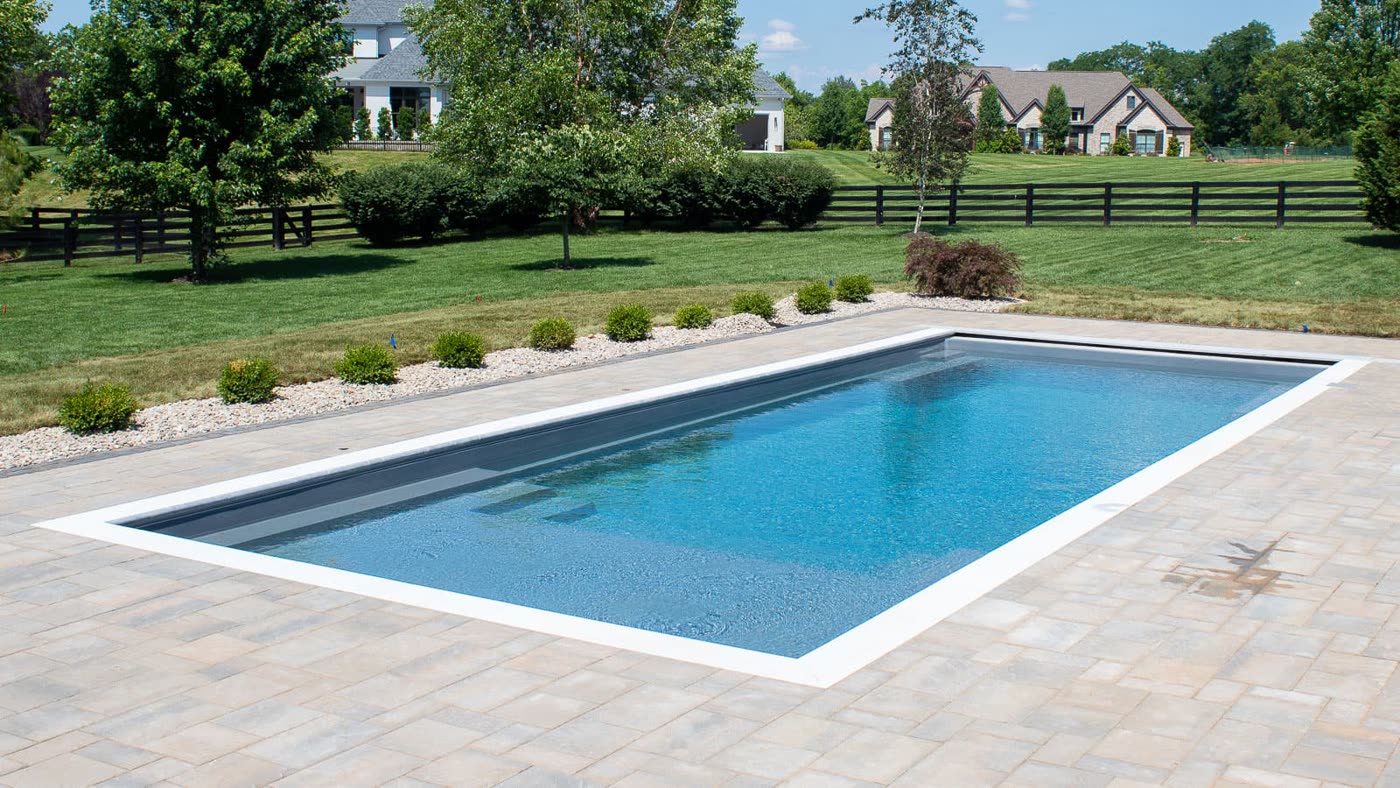
A fiberglass pool is a single pre-manufactured gelcoat shell, craned into the ground whole. There is no liner to replace, ever, and the smooth surface resists staining and algae growth better than vinyl typically does. The trade-off is that you are choosing from the manufacturer's shapes and sizes rather than a fully custom outline, and the upfront cost is higher than vinyl.
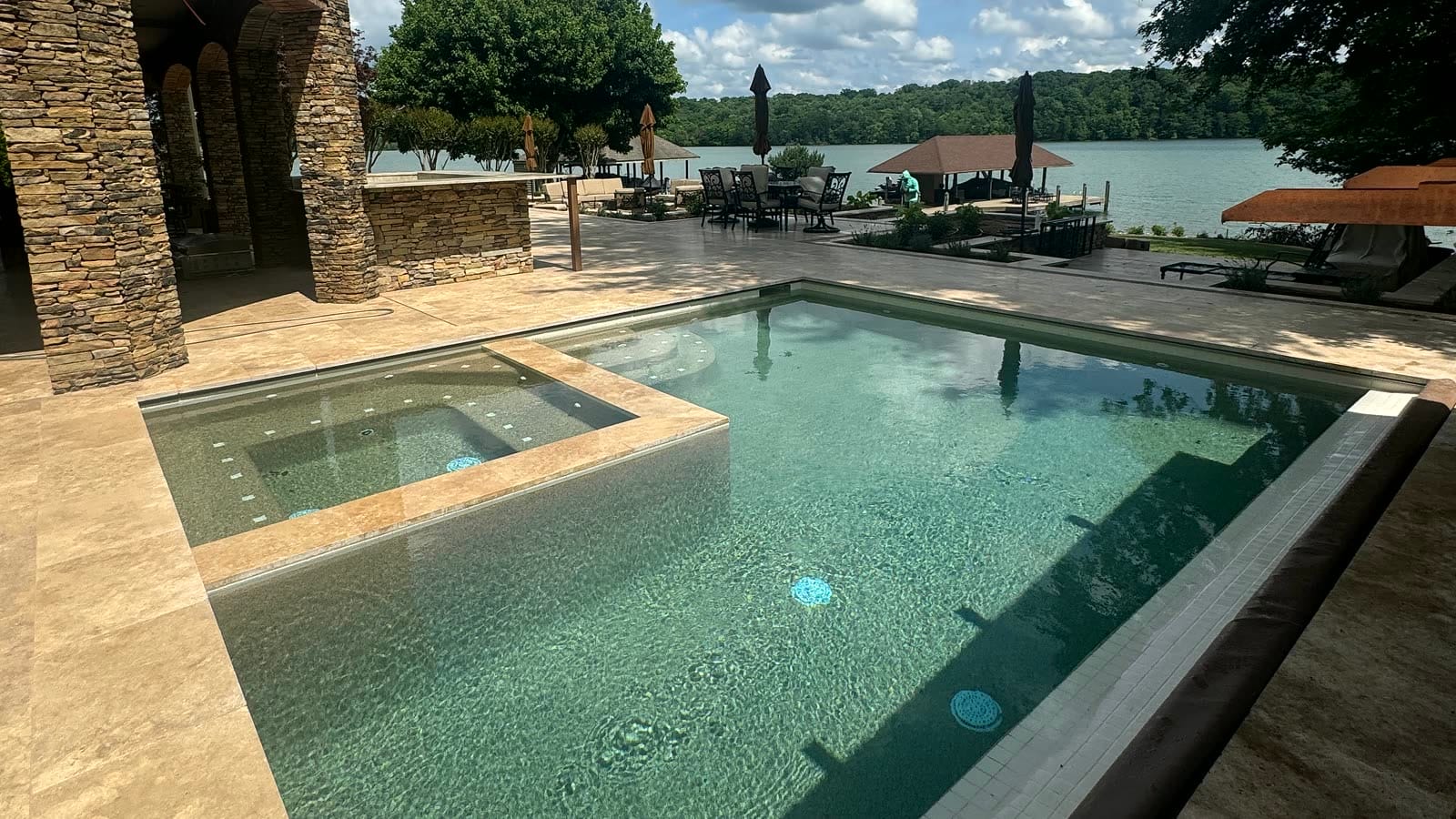
A gunite pool is built on-site from steel and concrete with an applied interior finish, plaster, pebble, or quartz. It offers the most design freedom of the three, any shape, depth, or feature you can engineer, and it typically carries the highest resale value. The interior finish is a maintenance item over time, similar in concept to a vinyl liner in that it eventually needs renewal, though finishes generally run on a longer cycle than a vinyl liner replacement, and the upfront cost is the highest of the three types.
For the full detail on how fiberglass and gunite compare to each other, our fiberglass versus gunite comparison is the deeper read. Fiberglass runs $80,000 to $190,000+ installed and gunite runs $95,000 to $350,000+ installed in our market, both detailed with what is included at each tier in the fiberglass pool cost guide and gunite pool cost guide.
When Vinyl Genuinely Makes Sense
We will say this plainly because it is true, not because we are selling it: if your absolute top priority is the lowest possible upfront cost, and you are comfortable planning for a liner replacement roughly once a decade as a normal part of ownership, vinyl can be the right call for your household. It gets more families into a pool sooner than fiberglass or gunite would allow on the same budget. That is a real, valid trade-off for some homeowners to make, and we are not going to pretend otherwise just because it is not what we build.
Why We Chose to Specialize in Fiberglass and Gunite
We build fiberglass and gunite because we believe in building something once and building it to last, without a recurring liner-replacement conversation built into the ownership experience. That is a specialization, not a universal truth about which pool type is objectively best for every homeowner. If lowest possible entry cost is your primary driver and long-term liner replacement does not bother you, a vinyl specialist is worth talking to. If you want a surface that is not on a replacement clock, fiberglass or gunite is where we can help.
See the Real Numbers for Your Yard
If fiberglass or gunite is a fit for your goals, request a free estimate and we will scope your project honestly, or get in touch to talk through which type suits your lot and budget. We will tell you straight if we think your situation is better served by something we do not build.
Christopher Morales
Co-founder of Morales Outdoor Living. 16+ years designing and building pools, patios, decks, and complete outdoor living spaces across East Tennessee. TN License #77919.
Meet the teamLike this guide? Add Morales Outdoor Living as a preferred source on Google.