Quick Answer
Most families use a pool for lounging and cooling off rather than lap swimming, so the right size is usually smaller than homeowners first assume. Fiberglass shells typically top out around 16 feet wide by 40 feet long, while gunite pools can be built to almost any size or shape. Shallow features like a tanning ledge tend to get used far more than extra depth.
- Fiberglass shells generally top out around 16 feet wide and 40 feet long, with many smaller sizes available.
- Gunite pools have no fixed size ceiling since the shell is shaped on site.
- Most families rarely use deep water the way they expect; shallow tanning ledges get used daily.
- Yard slope, rock, and setback requirements often constrain size more than raw lot square footage.
Do I need a deep end?
Most families do not use a deep end much after the first year or two; it is worth the budget mainly if someone specifically wants to dive or swim laps. A shallow tanning ledge typically gets far more daily use.
Is there a maximum pool size?
Fiberglass shells have manufacturer size limits, generally up to about 16 feet wide and 40 feet long. Gunite pools have no such ceiling since they are shaped on site to fit your yard.
The Short Answer
Bigger is not automatically better. Most families use a pool for lounging, cooling off, and hanging out with friends, not lap swimming, and a pool sized for how you actually live is usually smaller than what people first imagine. The right size for you depends on your family, your yard, and your budget, not on impressing anyone.
How Families Actually Use a Pool
Before you pick a size, think honestly about how your pool will get used. Most families spend the bulk of their pool time floating, standing around talking, cooling off, and letting kids splash in shallow water. Very few homeowners do serious lap swimming, and the ones who want to almost always know it ahead of time and design specifically for it.
If that is you, we can talk about a longer shell or a custom gunite shape built for laps. For everyone else, a pool sized for lounging and gathering, with a shallower, more social layout, gets used far more often than a long, narrow lap-style pool that looked good on paper.
Common Sizes We Build
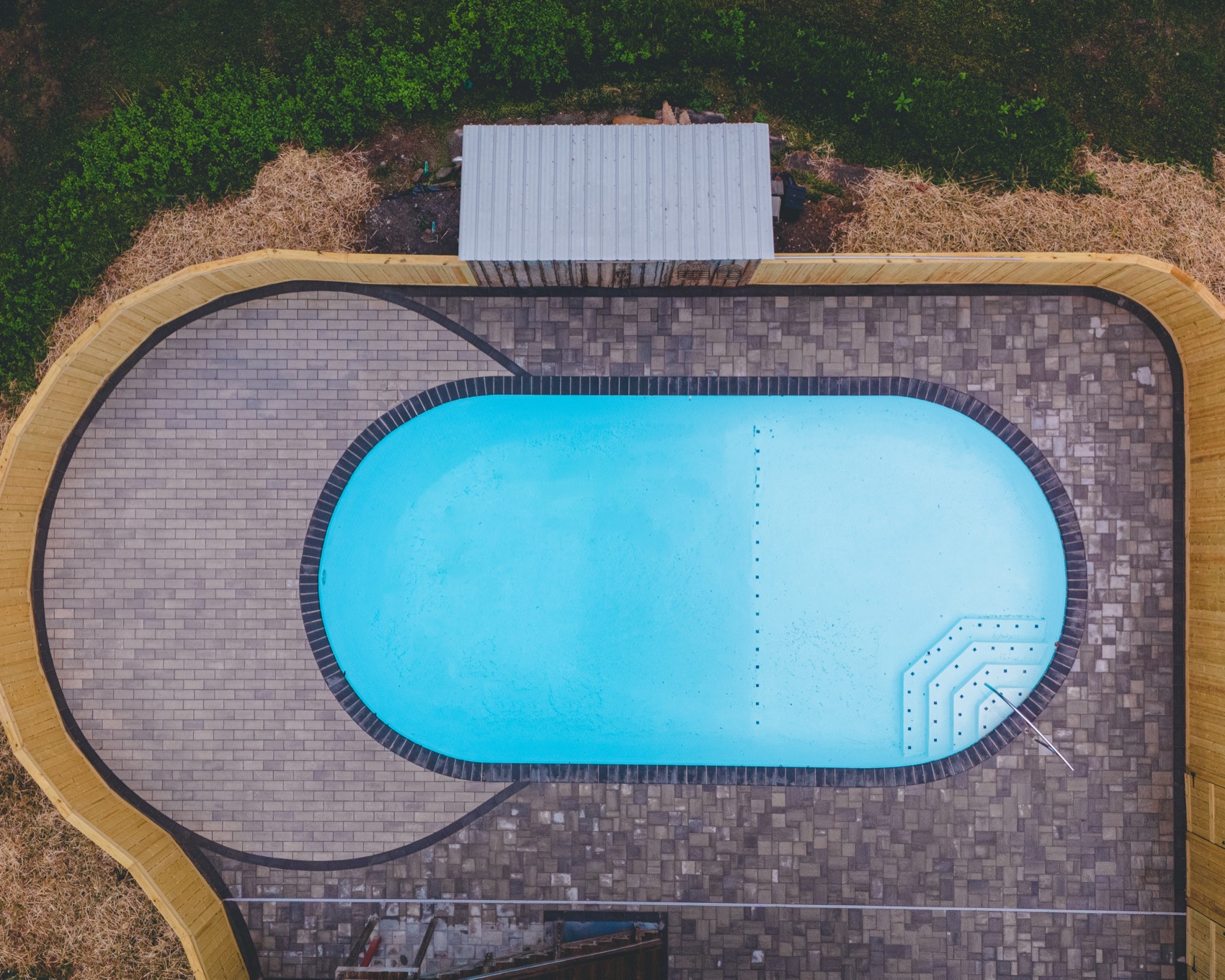
Fiberglass shells come in fixed shapes and sizes from the manufacturer, generally topping out around 16 feet wide and 40 feet long, with plenty of smaller options in between. That range covers the vast majority of backyards and family needs, and it comes with a quicker install and a smooth, durable surface. Learn more about the fiberglass build process and what fiberglass pools cost.
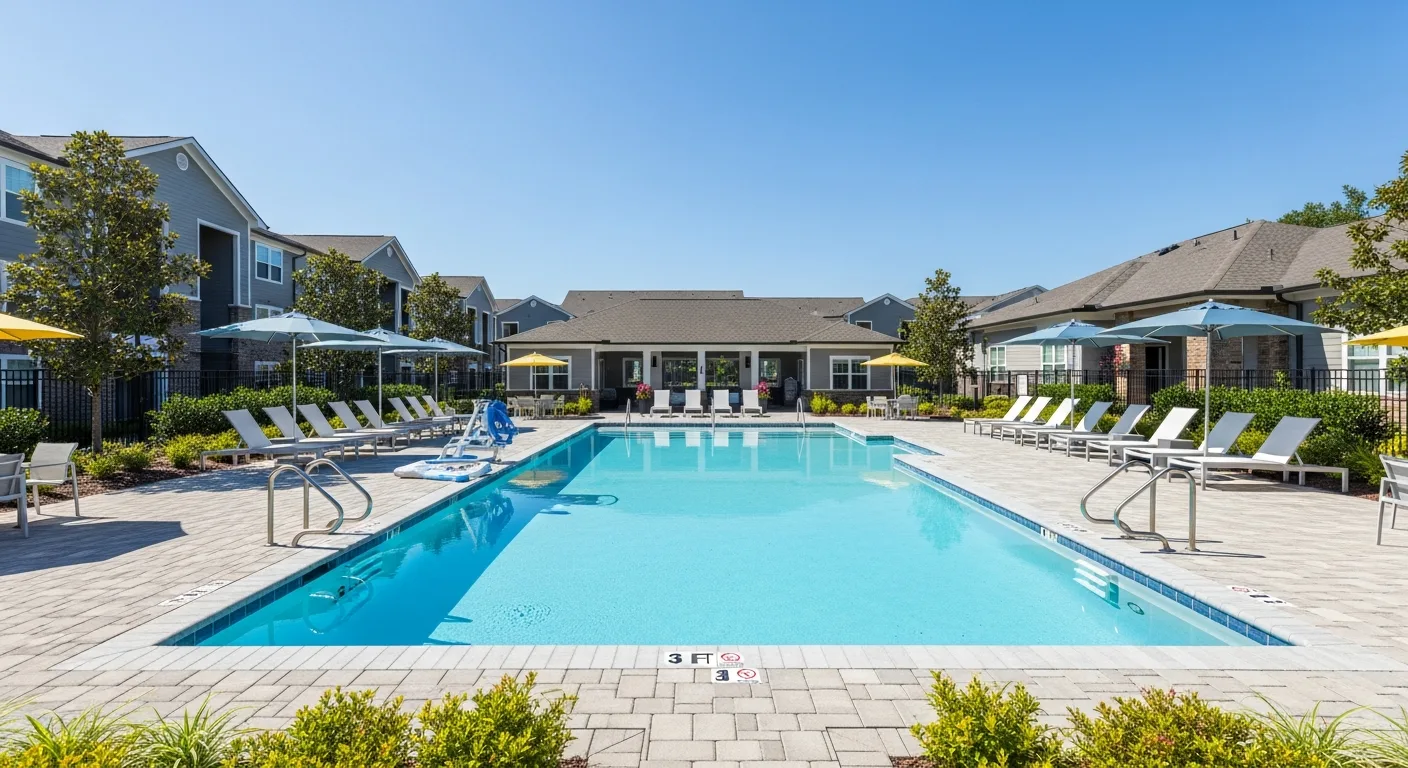
Gunite pools have no size ceiling. Because the shell is shot and shaped on site (a dry-mix process, not the wet-mix shotcrete some companies use), a gunite pool can be built to almost any size or shape your yard and budget allow, from a small custom plunge pool to a large resort-style shape with a tanning ledge, spa, and swim-up bar. See our gunite build process and gunite pricing for the details.
Depth: Where Most Plans Waste Money
A lot of first-time pool buyers assume they need a deep end, and most rarely use it the way they imagined once the pool is built. Diving boards and deep water get used a handful of times a year for most families, if that.
What gets used constantly is shallow water. A tanning ledge or sun shelf, just a few inches deep, is where kids play, where adults sit with a drink, and where dogs cool off. If you are trying to decide where to put your budget, a well designed shallow area earns its keep every single week of the season, while extra depth mostly earns its keep in the cost estimate. We cover this and other high-value choices in the pool features actually worth paying for.
What Your Yard Allows
Your lot has the final say. East Tennessee yards often come with slope, rock close to the surface, and setback requirements from your property line, septic system, or utility easements. A yard that looks small on paper can sometimes fit a pool comfortably once we account for the actual usable, level area, and a yard that looks generous can be more constrained than it appears once you subtract setbacks and slope.
This is why we walk every property in person before talking sizes. Two yards of the same square footage can support very different pools depending on grade and access. Our pool construction process starts with that site assessment so the size we recommend is one that actually works, not just one that fits on a drawing.
Cost Scales With Size, Not Just Style
Bigger pools cost more, plainly, because of the added shell, more excavation, more water to heat and treat, and more decking to surround it. If budget is a factor, a smaller pool with quality hardscape and a couple of well chosen features almost always beats a larger pool stripped down to bare basics. A well finished small pool looks and feels more expensive than an oversized pool with nothing around it.
Size It for Your Life
The right size pool is the one that matches how your family actually spends time outside, fits the yard you actually have, and leaves room in the budget for the decking and features that make it feel finished. Get an instant estimate to see what size fits your budget, or request a free phone consultation and we will walk your yard and talk through real options together.
Christopher Morales
Co-founder of Morales Outdoor Living. 16+ years designing and building pools, patios, decks, and complete outdoor living spaces across East Tennessee. TN License #77919.
Meet the team