Quick Answer
Cable, aluminum, composite, and wood are the four main deck railing options in East Tennessee, and each trades off view, maintenance, and cost differently: cable preserves the view best but costs more and needs periodic retensioning; aluminum is low-maintenance and durable; composite matches the decking for a cohesive look; and wood is the lowest upfront cost but needs the same staining and sealing cycle as wood decking.
- Railing is a real cost driver, not an afterthought: cable or aluminum railing is included in the $35,000 to $60,000 premium elevated deck tier, while standard balusters are included in the $15,000 to $30,000 standard tier.
- Cable railing uses horizontal steel cables for the best view preservation, but generally costs more than standard balusters and needs periodic tension checks to stay code-compliant.
- Aluminum railing holds a powder-coated finish well, will not rust or rot, and needs essentially no upkeep, though it does not preserve the view like cable.
- Building codes generally require guard railing above a certain deck height, commonly around 30 inches, with a minimum railing height commonly around 36 inches and baluster spacing tight enough that a small child cannot fit through.
What deck railing option is best for preserving a view?
Cable railing, since horizontal steel cables strung between posts get out of the way visually more than any other option, though it costs more and needs periodic retensioning.
What is the lowest-maintenance deck railing?
Aluminum railing needs essentially no upkeep beyond occasional cleaning, since it holds its powder-coated finish well and will not rust or rot.
The Short Answer
Railing is one of the most underestimated decisions in a deck build. It is not a finishing touch you tack on at the end, it is a real line item that changes both the look and the cost of the whole project, and on a small elevated deck it can eat a genuinely surprising share of the total budget. Cable, aluminum, composite, and wood are the four main options in East Tennessee, and each trades off view, maintenance, and cost differently. Here is the honest comparison.
Why Railing Costs More Than People Expect
Most homeowners plan a deck around the decking material and the framing and treat railing as an afterthought, something they will "figure out later." But railing runs the full perimeter of an elevated deck, it has to meet code for height and baluster spacing, and it is often the single most visible design element once you are standing on the deck looking out. In our deck cost guide tiers, cable or aluminum railing is baked into the $35,000 to $60,000 premium elevated tier as an included feature, while the $15,000 to $30,000 standard tier includes standard balusters, meaning upgrading railing type is exactly the kind of choice that can move a project from one tier to the next. On a smaller deck, where the railing run is a larger percentage of the total linear footage relative to the deck's square footage, that cost share is even more pronounced. It is worth pricing railing early, not as an afterthought.
Cable Railing
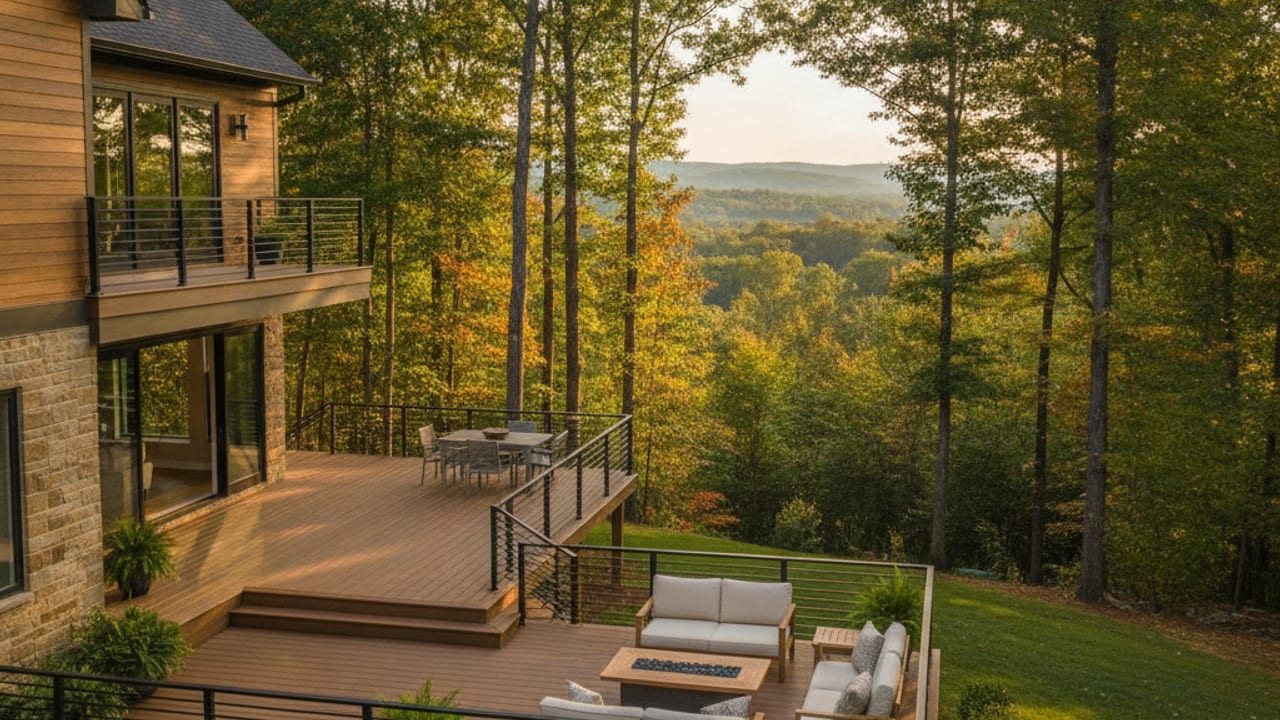
Cable railing uses horizontal steel cables strung between posts instead of vertical balusters, and its defining strength is view preservation. If your deck looks out over a slope, trees, or a backyard you actually want to see, cable railing gets out of the way visually in a manner no other option matches. The trade-off is that cable systems generally cost more than standard balusters and require periodic tension checks, since cables can loosen slightly over time and need to be retensioned to stay code-compliant and taut. For a view-focused elevated deck, many homeowners consider that maintenance a fair price for the sightline.
Aluminum Railing
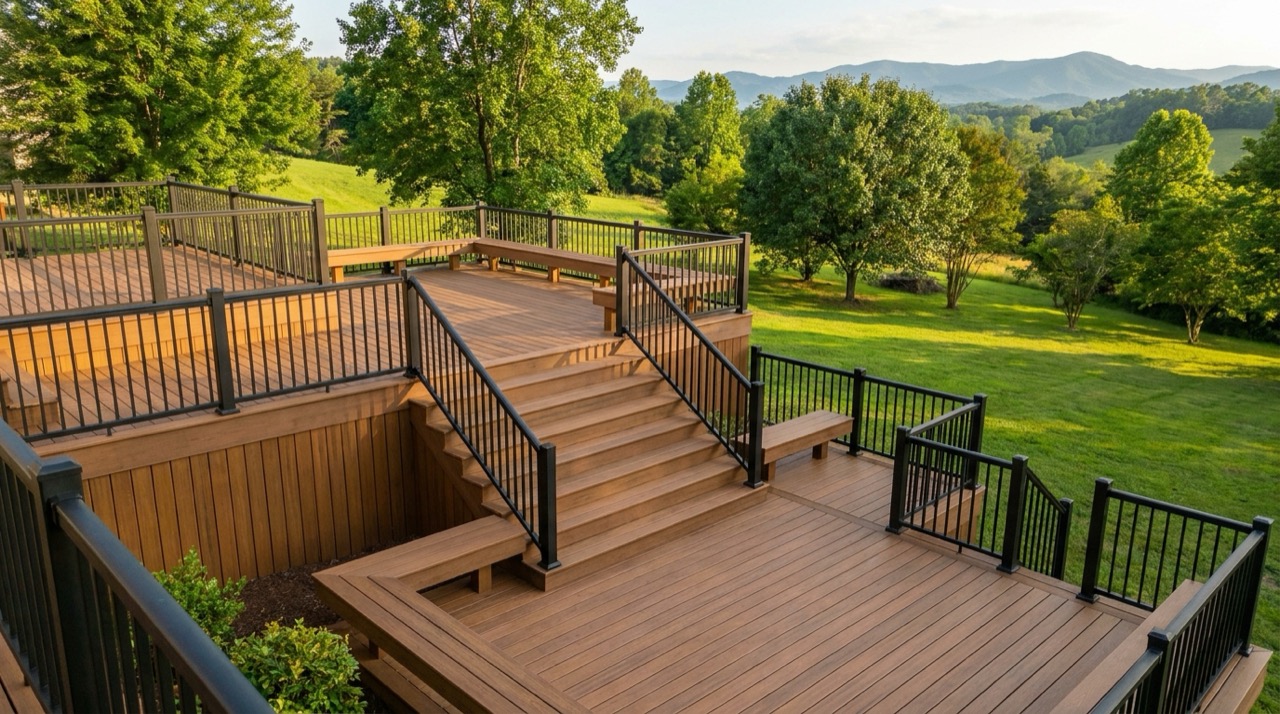
Aluminum railing is the low-maintenance workhorse. It comes in vertical baluster or horizontal styles, holds a powder-coated finish well against East Tennessee sun and humidity, will not rust or rot, and needs essentially no upkeep beyond occasional cleaning. It does not preserve the view the way cable does, since it still has visible balusters or rails breaking up the sightline, but it is a durable, attractive, genuinely low-hassle option that fits a wide range of deck styles.
Composite Railing
Composite railing matches composite decking in color and finish, which gives the whole deck a cohesive, built-as-one-system look. It resists fading and staining the same way composite boards do, and it needs no painting or staining over its life. It is a solid middle-ground choice if a matched aesthetic matters more to you than an unobstructed view, and it pairs naturally with the composite brands we install, which we cover in our best composite deck brands for Tennessee guide.
Wood Railing
Wood railing is the traditional, lowest-upfront-cost option, and it can look great, especially paired with a wood deck for a fully matched natural look. The honest downside is maintenance: wood railing needs the same staining and sealing cycle as wood decking to resist East Tennessee's sun, humidity, and freeze-thaw, and skipping that upkeep shows up as graying, splintering, and eventually loose balusters faster than any of the other three options. If you are already leaning wood for the decking, our wood deck maintenance cost guide is worth reading before you commit, since the railing will follow the same upkeep schedule as the boards.
Code Height, in Plain Words
Building codes generally require guard railing on any deck surface elevated a certain height above grade, commonly around 30 inches, and the railing itself has to reach a minimum height, commonly around 36 inches for residential decks, with baluster spacing tight enough that a small child cannot fit through. Exact thresholds and spacing requirements are set locally and can vary or be updated, so we build to current code as part of every project rather than quoting a specific number here as fixed fact. If your deck sits low to the ground, you may not need railing at all, which is one more reason a low, ground-level deck can come in under the elevated tiers in our deck cost guide.
How to Choose
A quick, honest way to think about it:
- Choose cable if the view is the whole point of building the deck.
- Choose aluminum if you want durability and low maintenance without paying the cable premium.
- Choose composite if a matched, cohesive look with the decking matters most.
- Choose wood if upfront cost is the priority and you are committed to the maintenance routine.
None of these are wrong choices. They are trade-offs, and the right one depends on what you are actually optimizing for.
Price It Before You Fall in Love With a Look
Because railing can swing a deck's total more than people expect, it is worth pricing your railing preference early in the conversation, not after the rest of the design is locked in. Request a free estimate and we will price your deck with the railing style you actually want included from the start, or get in touch to talk through which option fits your view, your budget, and how much maintenance you are honestly willing to keep up with.
Christopher Morales
Co-founder of Morales Outdoor Living. 16+ years designing and building pools, patios, decks, and complete outdoor living spaces across East Tennessee. TN License #77919.
Meet the teamLike this guide? Add Morales Outdoor Living as a preferred source on Google.