Quick Answer
For bare feet in a Tennessee summer, travertine and light-colored porcelain are generally the coolest and least slippery pool deck surfaces, plain dark stamped concrete tends to run hottest and can get slick if not textured well, and light-colored pavers land in the middle on both counts. Every material gets hot in direct, unshaded July sun, and color matters more than the material label, so choosing a light color is the highest-leverage decision regardless of which material fits your budget.
- Travertine is naturally porous and light in color, which keeps it noticeably cooler underfoot and gives it good natural wet-slip resistance, though it needs periodic sealing and sits at the premium end of the budget.
- Porcelain is dense, stain- and fade-resistant, and low-maintenance, but heat performance depends heavily on color: light porcelain stays cool while dark porcelain can run hot.
- Concrete pavers in light sandy or gray tones sit in the middle on both heat and slip, running cooler than plain dark concrete and offering solid slip resistance at a budget-flexible price.
- Hardscape pricing runs about $35,000 to $50,000 for a standard concrete paver patio, $35,000 to $55,000 for a premium large-format paver outdoor room, and $50,000 to $100,000+ for a travertine or porcelain estate terrace.
What is the coolest pool deck material for bare feet?
Travertine and light-colored porcelain are generally the coolest, thanks to travertine's natural porosity and light coloring. But any material gets hot in direct July sun, so color matters as much as the material.
Does concrete get too hot around a pool?
Dark stamped or broom-finished concrete can become uncomfortable underfoot in full Tennessee summer sun. A lighter tint and proper textured finish helps, but it still will not fully match travertine or light porcelain on peak-heat days.
The Short Answer
For bare feet in a Tennessee summer, travertine and light-colored porcelain are generally the coolest and least slippery surfaces around a pool, plain stamped concrete tends to run hottest and can get slick when wet if not textured well, and light-colored pavers land in the middle on both counts. But the honest truth that gets buried in most deck marketing is that every surface gets hot in direct July sun, and color matters more than the material label on the brochure. Here is the real head to head.
The Two Things That Actually Matter
Homeowners ask a lot of questions about pool decking, but when you strip it down to what you actually feel with bare feet, it comes to two properties:
- Heat underfoot. How hot the surface gets sitting in direct sun, and how fast it cools once shade or evening arrives.
- Wet-slip resistance. How the surface behaves the moment it is splashed, which is constantly, right next to a pool.
Everything else, cost, style, longevity, matters too, but these two are what your feet notice every single time you walk from the pool to a lounge chair.
Travertine: The Heat Champion
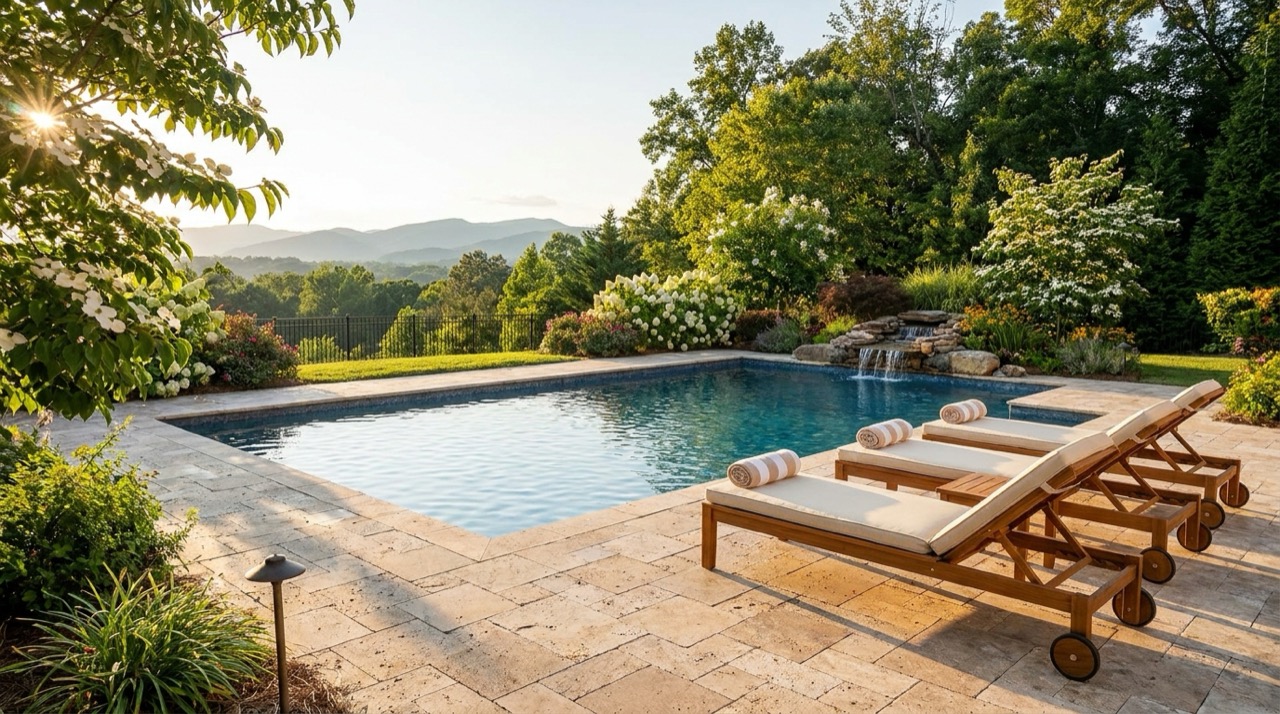
Travertine is naturally porous and light in color, and that combination is exactly why it stays noticeably cooler underfoot than denser materials in direct sun. The porous surface also gives it good natural slip resistance when wet, without needing a heavy texture applied. The honest trade-off is that the same porosity that keeps it cool also means it needs periodic sealing to resist staining, and it sits at the premium end of the hardscape budget.
Porcelain: Cool and Consistent, If You Choose Light
Porcelain pavers are dense and non-porous, which makes them highly stain- and fade-resistant and very low-maintenance over time, but their heat performance depends heavily on color. A light porcelain tone stays comparably cool to travertine, while a dark porcelain surface can run hot, since the density that makes porcelain durable also means it holds and radiates heat efficiently once it is dark-colored. Slip resistance on quality outdoor porcelain is generally good thanks to textured finishes engineered for wet areas, but always confirm the specific product carries a wet-rated slip finish before you commit to a color.
Pavers: The Versatile Middle Ground
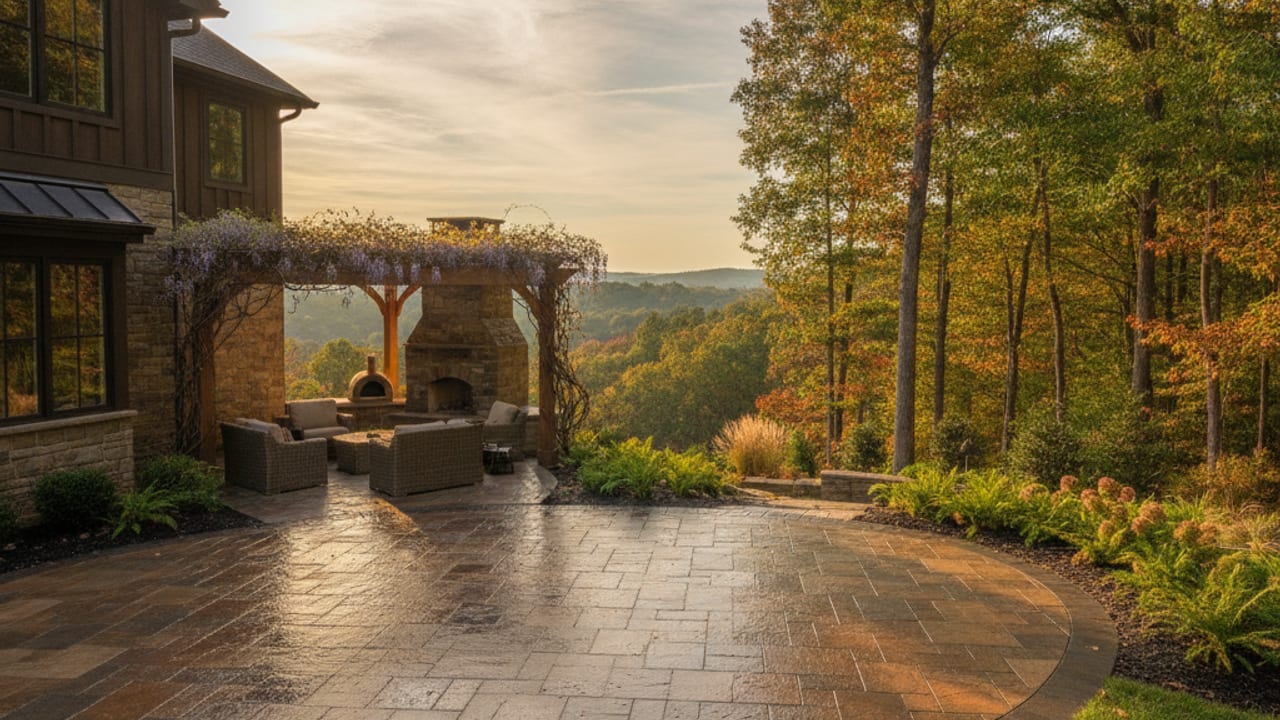
Concrete pavers, in light sandy or gray tones, sit in the middle on both heat and slip. They run cooler than plain dark concrete because of their lighter color options and the small gaps between units that allow some heat to dissipate, though they do not match travertine's natural coolness. Slip resistance is generally solid thanks to their textured surface, and they are the most budget-flexible of the premium options, with a wide range of styles from entry-level to large-format premium units.
Stamped or Plain Concrete: Honest About the Downside
Plain broom-finished or stamped concrete is the most affordable decking option and can look genuinely good when done well, but it is the material most likely to disappoint underfoot in a Tennessee summer if it is poured in a darker color. A dark stamped concrete deck in full July sun can become uncomfortable to walk on barefoot in the early afternoon. If concrete is your budget, choosing a lighter tint and a proper broom or textured finish for slip resistance solves most of the problem, but it does not fully close the gap with travertine or light porcelain on peak-heat days.
The Honest Truth Nobody's Brochure Says
Every one of these materials gets hot in direct, unshaded July sun. There is no pool deck material that stays cool to bare feet at 2pm with zero shade, full stop. Color is doing more work than the material label in almost every heat comparison you will read, including this one, a light travertine will always beat a dark travertine, and a light concrete will often beat a dark porcelain. If heat underfoot is a real priority, the single highest-leverage decision is choosing a light color in whatever material fits your budget, and pairing it with shade, a pergola or pavilion over at least part of the deck makes a bigger difference on a 95-degree day than switching material tiers does.
What Deck Materials Cost in Our Market
Hardscape pricing in East Tennessee runs from about $35,000 to $50,000 for a standard concrete paver patio, $35,000 to $55,000 for a premium large-format paver outdoor room with a seating wall and lighting, and $50,000 to $100,000+ for a travertine or porcelain estate terrace with multi-level terracing. The pool decks page and our full patio cost guide break down what is included at each tier so the number is not a guess.
Choose the Deck With Your Feet in Mind
The right material is a real trade-off between budget, style, and how the surface actually feels to live on, and it is worth walking a sample in your own sun before deciding. Request a free estimate and we will help you weigh heat, slip, and cost for your specific yard, or get in touch to talk through which material fits how you actually use your pool.
Christopher Morales
Co-founder of Morales Outdoor Living. 16+ years designing and building pools, patios, decks, and complete outdoor living spaces across East Tennessee. TN License #77919.
Meet the teamLike this guide? Add Morales Outdoor Living as a preferred source on Google.