Quick Answer
East Tennessee backyards flood because dense red clay absorbs water slowly, so storm rain runs across the surface to wherever the grade sends it. Real fixes combine regrading, French drains, channel drains, permeable pavers, dry creek beds, and retaining walls with proper drainage, designed into the hardscape rather than bolted on after.
- Red clay is dense and slow-draining, so most storm water moves across the surface instead of soaking in.
- A French drain is a gravel trench with a perforated pipe that collects subsurface water; channel drains catch surface sheet flow at patios and pool decks.
- Every Morales Outdoor Living hardscape project starts with a drainage plan: pitched patios, open-graded stone bases, and walls with gravel backfill and drain pipe.
- Standalone hardscape projects start around $35,000; retaining walls run $8,000 to $150,000+ depending on height, length, and engineering.
How do I know if my yard has a real drainage problem?
The same puddle in the same place after every rain, washed-out mulch along a repeating path, a permanently soggy stripe of lawn, or water reaching the crawlspace. One wet week is weather; a repeating pattern is grading.
Can drainage be fixed as part of a patio or pool project?
That is the best time to fix it. Grading, drains, and the hardscape base get engineered together as one design instead of patched together by separate contractors.
The Short Answer
East Tennessee backyards flood because our red clay barely absorbs water. Rain that sandy soil would drink in runs across the surface of clay instead, and wherever your grade sends it, that is where it collects: the low corner of the lawn, the edge of the patio, or worst of all, against the house. The fix is never one gadget. It is grading, drainage, and hardscape designed together, which is exactly how we build every project.
How to Tell You Have a Real Drainage Problem
- Standing water that sits for hours or days after a storm
- Mulch washed out of beds and onto the lawn or driveway in the same path every time
- A soggy stripe of lawn that never firms up, even in a dry week
- Moss, mosquitoes, and mud in the same low corner every season
- Water in the crawlspace or damp foundation walls, the symptom that should move fastest
One wet week is weather. The same puddle in the same place after every rain is a grading and drainage problem, and it does not fix itself.
Why It Happens Here
Red clay is dense. Water moves through it slowly, so during a hard East Tennessee storm, almost everything runs across the surface. Then the usual suspects pile on: downspouts dumping roof water at the foundation, a neighbor's yard grading toward yours, and older patios or walls built with no drainage plan at all. Clay is also why shortcuts fail so predictably here, whether that is a paver patio without a real base or a retaining wall without gravel and a drain pipe behind it.
The Fixes We Actually Build
- Regrading. The cheapest water management is gravity pointed the right way. We reshape grade so water moves away from the house and toward a place it can safely go.
- French drains. A gravel trench with a perforated pipe that collects subsurface water and carries it away. The classic fix for the soggy stripe of lawn.
- Channel drains. Set into patios and pool decks to catch sheet flow at the surface before it reaches a door, a step, or a garage.
- Permeable pavers. Hardscape that lets water pass through its joints into a stone reservoir below instead of running off the surface.
- Dry creek beds. A graded, stone-lined path that turns the route water already wants to take into a feature instead of an erosion scar.
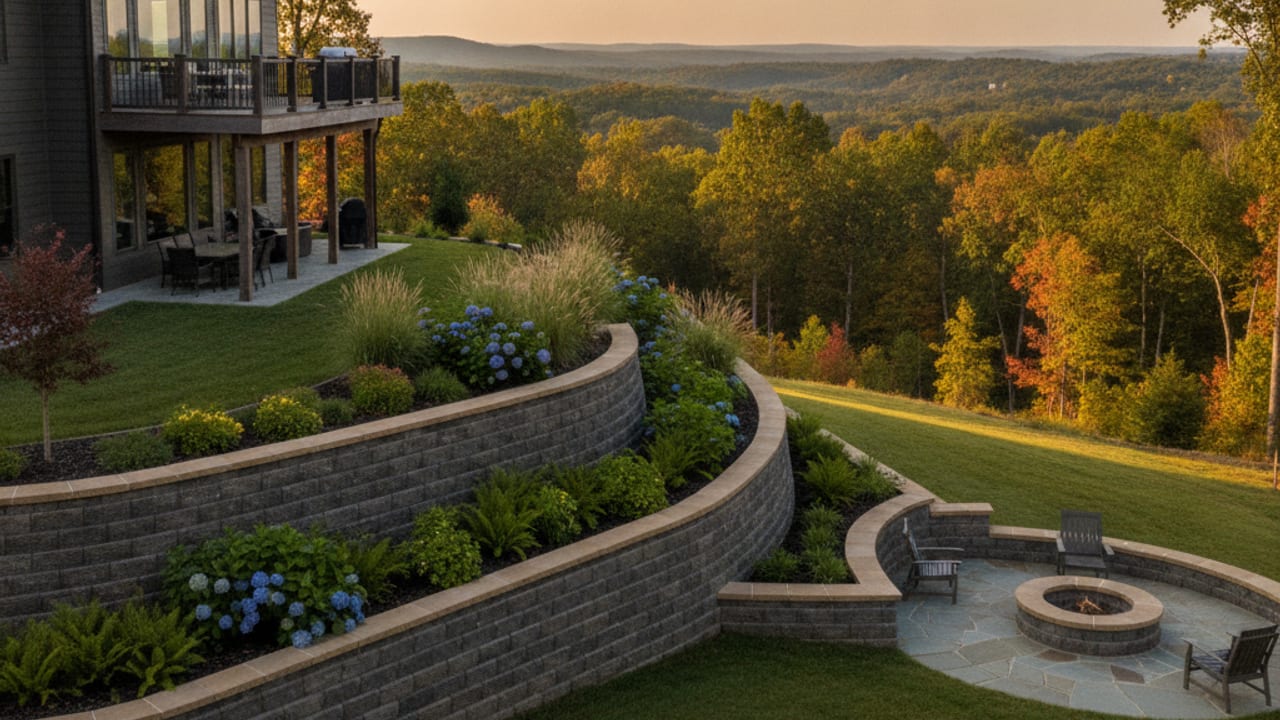
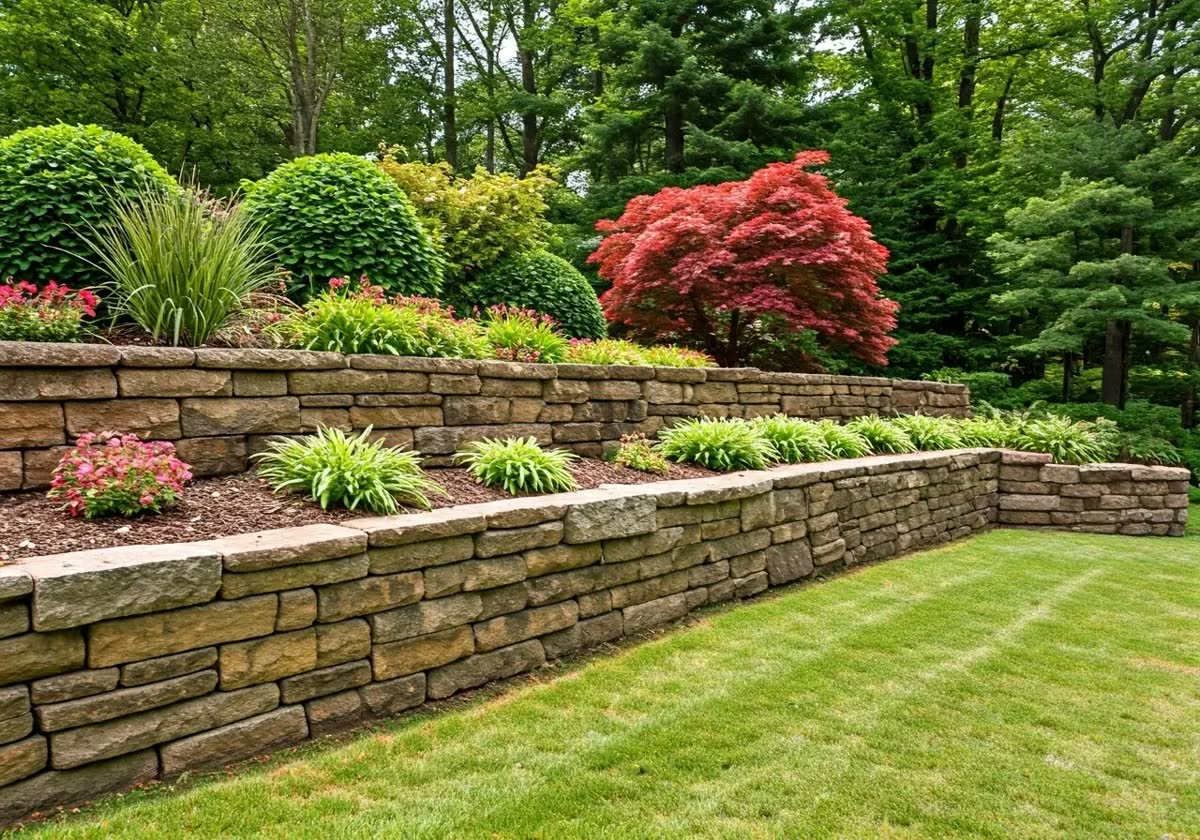
- Retaining walls with real drainage. Gravel backfill and a drain pipe at the base, so the wall manages the hillside's water instead of being destroyed by it. See our retaining wall page for how we build them.
Most real solutions combine two or three of these. Water problems are system problems.
Drainage Is Designed In, Not Bolted On
Here is the part that matters if you are planning a patio, pool, or turf project: every hardscape we build starts with a drainage plan. Patios get pitched so water sheets away from the house. Bases are open-graded stone that moves water. Walls get gravel and pipe. Turf sits on a free-draining base. That is why the right time to fix a wet yard is usually as part of the hardscape project you were already planning, one design, one crew, no finger-pointing between a drainage guy and a patio guy later.
What It Costs
Standalone hardscape projects with us start around $35,000, and drainage work is usually folded into a larger patio, wall, or backyard project rather than sold as a gadget on its own. Retaining walls run $8,000 to $150,000+ depending on height, length, and engineering. See the patio cost guide and retaining wall cost guide for how the numbers move.
Stop Living Around the Puddle
If you are routing the dog around the swamp corner every winter, the yard is telling you where the water wants to go. Get an instant estimate or request a free phone consultation and we will walk the yard in the rain if that is what it takes to see it working.
Christopher Morales
Co-founder of Morales Outdoor Living. 16+ years designing and building pools, patios, decks, and complete outdoor living spaces across East Tennessee. TN License #77919.
Meet the team