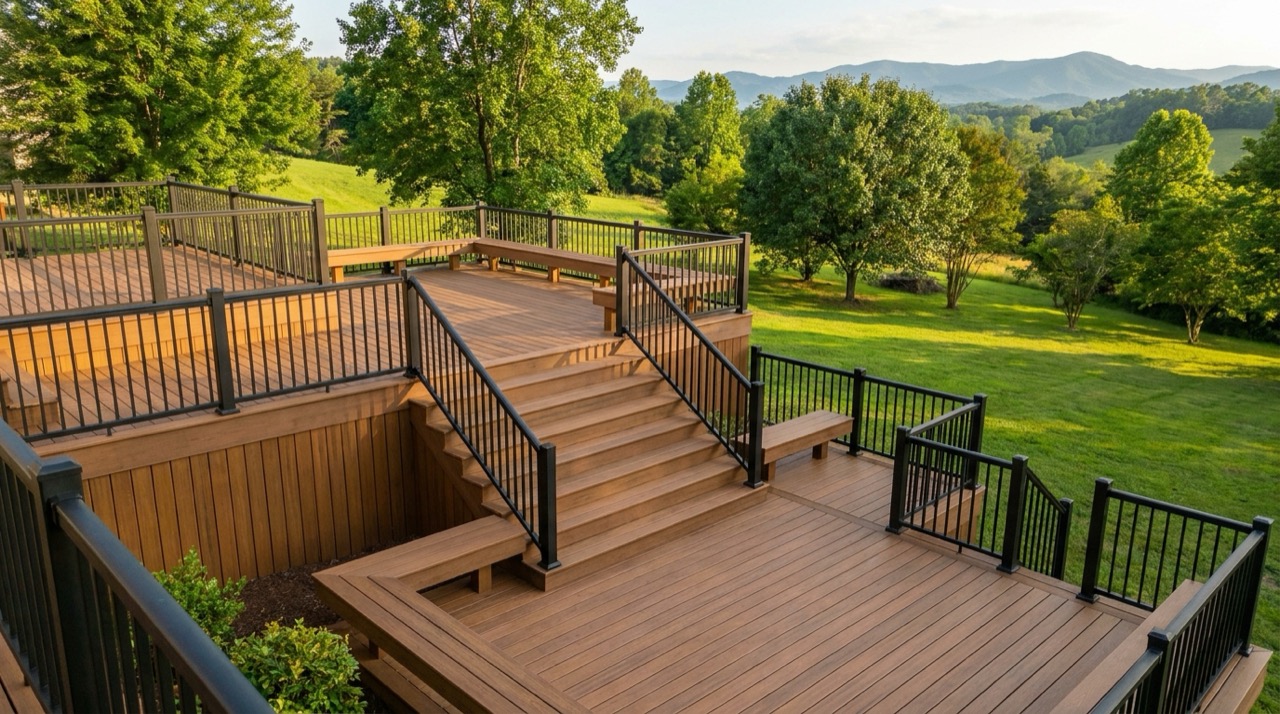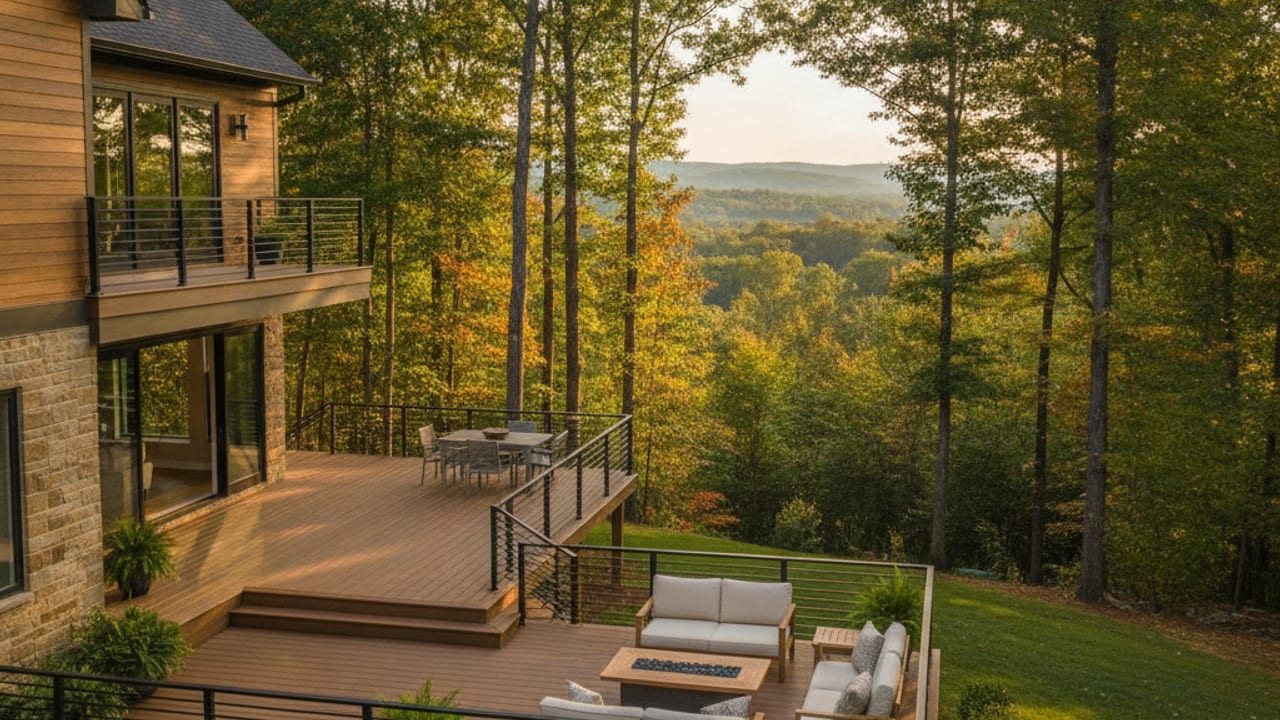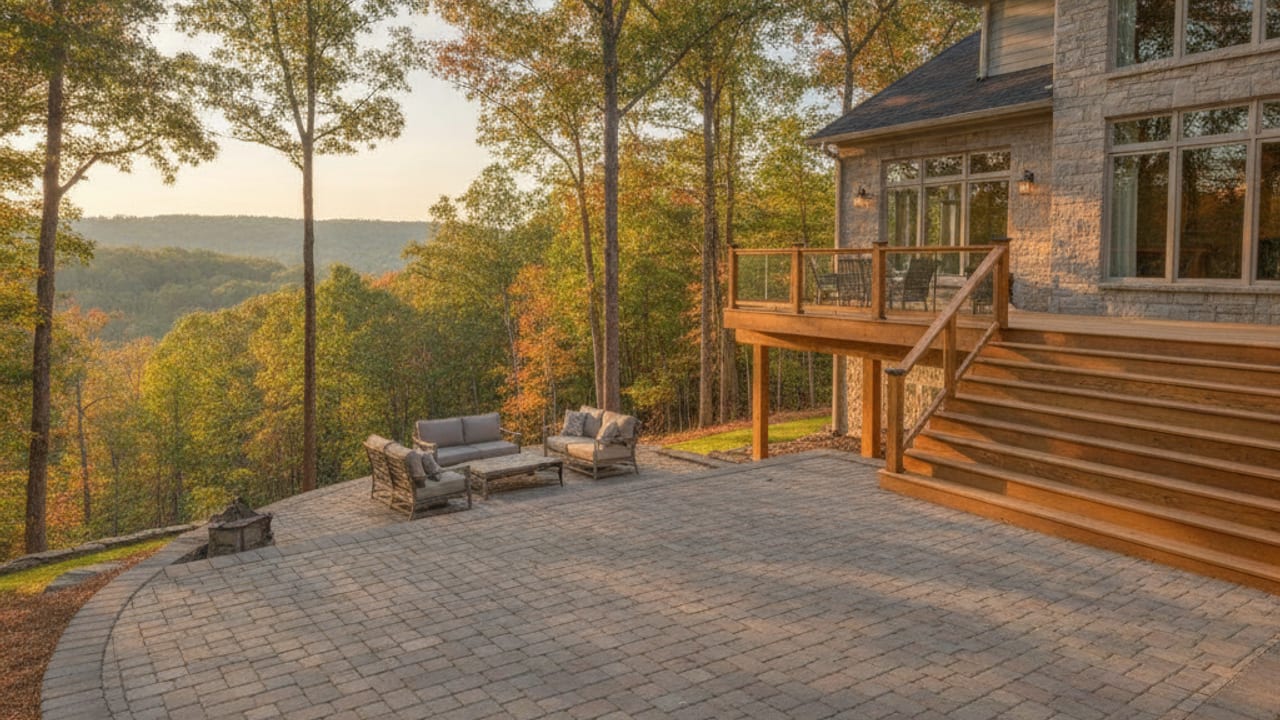
Quick Answer
A new deck typically adds meaningful value to an East Tennessee home, but it is honest to expect it to recoup a solid share of what you spend rather than the full cost at resale. The bigger return for most homeowners is the years of actual daily use before ever selling, and building a deck sized to match what similar homes in your neighborhood already have protects the investment better than overbuilding for the street.
- A deck makes a home more attractive to buyers and can help it sell faster, but that is a separate question from a dollar-for-dollar return on construction cost at resale.
- A composite deck tends to show better years down the line since it resists fading and staining, while an aging, neglected wood deck can read as an upcoming expense to a buyer.
- Overbuilding a $60,000 to $150,000+ covered custom deck on a home in a lower-priced neighborhood is unlikely to recoup that gap at resale, since buyers shop by comparable sale prices first.
- A well-built deck in the $15,000 to $30,000 standard tier or $35,000 to $60,000 premium elevated tier, sized to match the neighborhood, is usually the smarter move if resale return is the top priority.
Does a deck add value to a home in East Tennessee?
Yes, meaningful value, but expect to recoup a solid share of the cost rather than the full amount at a straight resale. The years of daily use before selling are often the bigger return.
Should I build the biggest deck I can afford for resale value?
Not necessarily. A deck that is too much house for the neighborhood is unlikely to recoup that gap, since buyers compare against similar homes nearby. A deck sized to match the neighborhood usually protects the investment better.
The Short Answer
A new deck typically adds meaningful value to an East Tennessee home, but it is honest to expect it to recoup a solid share of what you spend, not the full cost, in a straight resale calculation. That is true of nearly every home improvement, not a knock on decks specifically. The more useful way to think about a deck's value is that resale is only part of the return. The other part, arguably the bigger part for most homeowners, is the years of actual use you get out of it before you ever sell.
Why "Adds Value" and "Pays for Itself" Are Different Questions
These get conflated constantly, and it leads to disappointment. A deck almost certainly makes your home more attractive to buyers and can help it sell faster or hold its price better against comparable homes without one. That is real value. Whether that translates into a dollar-for-dollar return on your specific construction cost at resale is a separate and much harder question, one that depends on your local market, your specific buyers, how the deck was built, and timing you cannot control. We are not going to hand you a specific ROI percentage, because any number you see quoted nationally does not account for East Tennessee's market, your neighborhood, or the quality of your particular build, and treating a generic figure as a promise sets you up to be let down.
The Value You Get Regardless of Resale
Here is the part that gets undersold in most "is it worth it" conversations: you get to use the deck. Every dinner outside, every morning with coffee, every gathering that would have been cramped indoors, all of that is real value you bank the moment the deck is finished, independent of what a buyer eventually pays for your house. For a lot of homeowners, especially those planning to stay put for years, the daily-use value is the actual return, and resale is a secondary bonus. If you are trying to decide whether a deck is worth building at all, that reframe matters more than any resale percentage.
Composite vs Wood: How Buyers Perceive Each
Material choice affects both the buyer's first impression and the honest condition of the deck at resale. A composite deck, built with a quality capped board, tends to show better years down the line because it resists fading and staining in a way wood does not. A buyer touring a home with an aging wood deck, even a well-maintained one, can read gray, worn boards as an upcoming expense, while a composite deck of the same age often still looks close to new. Wood costs less upfront and has genuine fans for its natural look, but it demands ongoing staining and sealing to look its best, and a neglected wood deck can actively hurt a buyer's impression rather than help it. Our deck material comparison lays out the full trade-offs, and if you already have a wood deck and are wondering whether it is worth saving before you sell, deck repair versus replace is the honest framework for that decision.
When Not to Overbuild for the Neighborhood
This is the downside nobody wants to say out loud, but it is the honest truth: a deck can be too much house for the neighborhood. If you build a $60,000 to $150,000-plus covered, custom deck with heavy timber framing and premium finishes on a home in a market where comparable houses are selling in a much lower range, you are unlikely to recoup that gap at resale. Buyers shop by neighborhood and comparable sale prices first, and a spectacular deck rarely pulls a home's value meaningfully above what the surrounding houses are commanding. If resale return is genuinely your top priority, and it is fair if it is, the smarter move is usually a well-built deck in the $15,000 to $30,000 standard tier or the $35,000 to $60,000 premium elevated tier, sized and finished to match what similar homes in your area already have, rather than the top end of what is possible. Our deck cost guide breaks down what each tier actually includes so you can match ambition to market.
If, on the other hand, you are building the deck for yourself and plan to enjoy it for a decade or more before selling, that math changes entirely, and building the deck you actually want is the right call.
What Actually Protects the Investment
Whatever tier you build, the things that protect a deck's value over time are proper structure, quality materials, and code-compliant railing and stairs, not flashy upgrades. A deck that is structurally sound and well-maintained holds its appeal to buyers far better than one that looks impressive on day one but starts showing wear within a few years. If you are weighing a deck against a patio for your specific yard, our comparison of deck versus patio walks through which one tends to suit different lots and goals better.
Build for Your Life First, Resale Second
The most honest advice we can give is to build the deck that fits how you actually want to live in your backyard, sized sensibly for your neighborhood, and let the resale bump be a bonus rather than the whole reason you build. Request a free estimate and we will help you find the right tier for your home and budget, or get in touch to talk through what actually makes sense for your street and your plans.
Christopher Morales
Co-founder of Morales Outdoor Living. 16+ years designing and building pools, patios, decks, and complete outdoor living spaces across East Tennessee. TN License #77919.
Meet the teamLike this guide? Add Morales Outdoor Living as a preferred source on Google.