Fire and water look good together, and in East Tennessee they earn their keep. Fire gets you out on the pool deck on cool spring nights and well into fall, long after the water's too cold to get in. The trick is picking the right kind of fire for your yard and putting it in the right spot. Here's how we walk homeowners through it.
The Four Ways to Put Fire Near a Pool
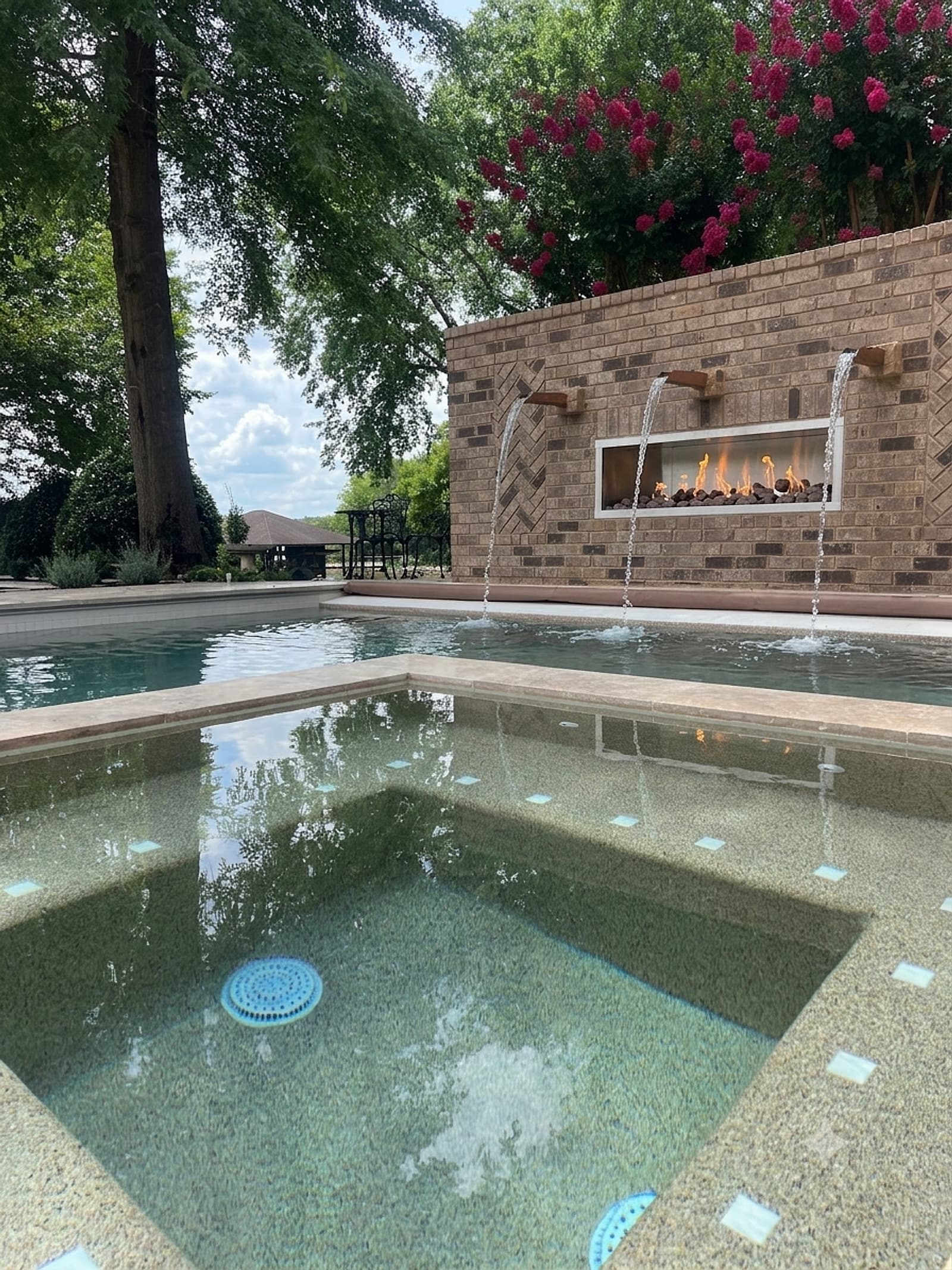
Fire bowls on the pool edge. Bowls sit on pedestals or the raised wall at the back of the pool. Most are gas, and some pair fire with a water spillover into the pool. They're the piece you see from the house, so they do a lot for the look. They're not where people sit and hang out.
A fire pit on the pool deck or a nearby patio. A pit gives swimmers a warm spot to land after they get out of the water. It can be gas or wood. If you want to compare the two, our gas vs wood burning fire pit guide covers it.
An outdoor fireplace. Next to a pool, a fireplace can anchor a covered area or outdoor kitchen at one end of the deck. See our outdoor fireplaces page for what goes into one.
Fire tables and linear burners. A fire table works like a coffee table with a flame. A linear burner runs along a seat wall or a raised bond beam. Both are good when you want a low, clean line of fire without a big structure.
Still deciding between a pit and a fireplace in general? Our outdoor fireplace vs fire pit guide covers cost, heat, seating, and footprint side by side. This page sticks to what changes when the fire sits beside a pool.
Where to Put Fire So It Works With the Pool
Placement matters more than which product you pick. Here's what we look at when we're standing in your yard.
Wind. Our river valleys and ridgelines push wind in a pattern that changes yard to yard. We watch where it comes from before we place a flame. Smoke blowing across the pool every evening gets old fast.
Splash and wet feet. Fire pits and tables do best set back from the water's edge, out of the splash zone and away from the path kids run from the house to the pool. Fire bowls are the exception, since they are made to sit on the pool wall.
Sight lines. Most people want to see the fire from the kitchen window or the back door. So we plan the layout from inside the house first.
Clearances. Every gas appliance comes with the manufacturer's installation instructions, and those spell out clearances to things that burn, like a pergola, a covered roof, or furniture. We follow them, and your inspector checks against them. If you plan a pergola or covered patio near the fire, decide on both together.
Footing and decking. A fireplace is heavy and needs its own footing. A pit or table needs a solid base. If the pool deck is going in at the same time, that's the cheapest moment to plan for both. Our pool decks page covers deck materials.
Gas or Wood Next to a Pool
Most poolside fire we build is gas, and for good reason. You turn it on with a switch or an app, there are no embers landing in the water or on a pool cover, and there is no ash to clean out of the skimmer.
Wood still has its place. It gives real heat and that crackle a lot of folks want. If you go wood, set it farther from the water and think about which way the smoke goes. Some neighborhoods and HOAs also have rules about open burning, so check before you commit.
Gas Lines, Electrical, and Permits
Gas fire needs a gas supply. That means a line from your natural gas meter or a propane tank, sized for everything on it. If your pool heater is gas too, the line has to carry the heater and the fire at the same time.
Fire features with electronic ignition, lighting, or automation also need power, and anything electrical near a pool has its own set of code rules. This is work for licensed trades, period.
Gas line work and new electrical usually need a permit and an inspection, but the details depend on where you live and which office covers your address. We pull permits as part of the build. Our permits and HOA approval page explains how that works.
What Moves the Cost of a Poolside Fire Feature
We don't post one number for fire features because the spread is too wide. A pair of gas bowls on an existing wall and a full masonry fireplace are two different jobs. These are the things that move the price:
- Type and size. Bowls, a pit, a table, and a fireplace each sit in a different price range.
- Fuel and distance. How far the gas has to run from the meter or tank, and whether the line has to be upsized for a heater.
- Ignition. A match lit burner costs less than electronic ignition tied to your pool automation.
- Stone and finish. Natural stone, veneer, and precast all price differently.
- Access and timing. Building fire during the pool build, while the yard is open, usually costs less than cutting into a finished deck later.
- Covered areas. A fireplace under or near a roof adds framing and clearance work.
When we price it out, you get an honest range and the reason it moves. I won't hand you a number I'd have to change later. If you are budgeting a whole pool project, our best pool features worth the money guide helps you decide where fire fits.
Add It Now or Add It Later
If a pool is going in, plan the fire now even if you build it later. Run the gas stub and the conduit while the ground is open, and leave a footing or a pad where the pit or fireplace will go. That way adding fire in a year or two is a small job, not tearing up a finished deck.
Pool already built? Fire can still go in. We look at where gas and power can reach without cutting more of the deck than needed.
Frequently Asked Questions
Can you put a fire pit next to a pool?
Yes. Most fire pits do best set back from the water's edge, out of the splash zone and away from the main walking path, with the manufacturer's clearances met. Fire bowls are the exception because they are built to sit on the pool wall.
Is gas or wood better for a fire feature by the pool?
Gas is the more common pick next to water. It starts with a switch, sends no embers or ash toward the pool, and works with pool automation. Wood gives more heat and the crackle some people love, but it should sit farther from the pool, and smoke direction matters.
Do I need a permit for a gas fire pit or fireplace by my pool?
Usually the gas line and any new electrical need a permit and inspection, but the rules depend on your city or county. We pull permits and handle inspections as part of the build.
Can my pool heater and fire feature share a gas line?
They can share a supply, but the line has to be sized for both running at once. That gets figured out during design, not after.
How much does a fire feature by the pool cost?
It depends on the type, the gas run, the ignition, the stone, and whether it is built with the pool or added later. We price each one for your yard and give you an honest range with the reasons it moves.
Can I add a fire feature after my pool is built?
Yes. It costs less and disturbs less when the gas and power were stubbed out during the pool build, but we can add fire to an existing pool deck too.
Planning a Pool With Fire?
Tell us what you have in mind and send a few photos of the yard so we can get our eyes on it and make sure it's something we can help with. Then we'll come out, walk it with you, and show you where fire makes sense. Contact us here, or see our fire pits and Knoxville pool construction pages.
Christopher Morales
Co-founder of Morales Outdoor Living. 16+ years designing and building pools, patios, decks, and complete outdoor living spaces across East Tennessee. TN License #77919.
Meet the teamLike this guide? Add Morales Outdoor Living as a preferred source on Google.