Quick Answer
In the Knoxville area, a retaining wall runs from about $8,000 for a landscape wall under four feet up to $150,000 or more for a tall engineered wall over eight feet with full PE-stamped engineering. Height is the headline driver, but access, drainage, and soil compound on top of it, and walls above roughly four feet cross into required permitting and formal engineering in much of East Tennessee, which is a real cost jump, not a rounding error.
- Landscape wall under 4 feet: $8,000 to $18,000, using segmental block, gravel drainage, and standard access. Structural wall 4 to 7 feet: $20,000 to $50,000, with terraced sequencing, premium block, and a French drain system.
- Tall engineered wall 8 feet and up: $60,000 to $150,000 and up, requiring PE-stamped plans, geogrid-reinforced backfill, natural-stone facing, and code-required safety railing.
- Walls above roughly four feet require a permit and a stamped engineering design in much of East Tennessee, since a wall that size holds back a genuinely dangerous amount of soil and water pressure.
- Drainage determines whether a wall survives East Tennessee clay and freeze-thaw winters; gravel drainage is standard at every tier and a French drain system is standard at the structural tier and above.
How much does a retaining wall cost in Knoxville?
From about $8,000 for a landscape wall under four feet up to $150,000 or more for a tall engineered wall over eight feet. Height, access, drainage, and soil all move the price.
Do I need a permit for a retaining wall in East Tennessee?
In much of the area, walls above roughly four feet require a permit and a formal, PE-stamped engineering design, since they hold back enough soil and water pressure to be a structural project, not a landscaping one.
The Short Answer
In the Knoxville area, a retaining wall runs from about $8,000 for a landscape wall under four feet up to $150,000 or more for a tall engineered wall over eight feet with full PE-stamped engineering. For the complete breakdown of each tier, our retaining wall cost guide is the pillar page with the full ranges. This post is about the "why" behind those numbers, because in East Tennessee, retaining walls are one of the most site-sensitive features we build, and understanding what moves the price will save you from sticker shock.
Why Walls Swing Harder Than Almost Anything Else
Height is the headline driver, but it is not the only one. Access, drainage, and soil all compound on top of height in a way that a flat patio or a deck simply does not experience. A short accent wall on flat, easy-access ground and a tall structural wall on a steep, hard-to-reach slope can be worlds apart in price even if the linear footage looks similar on paper. That is why we weight site conditions more heavily for walls than for almost any other category we build.
Tier by Tier: What Drives Each Range
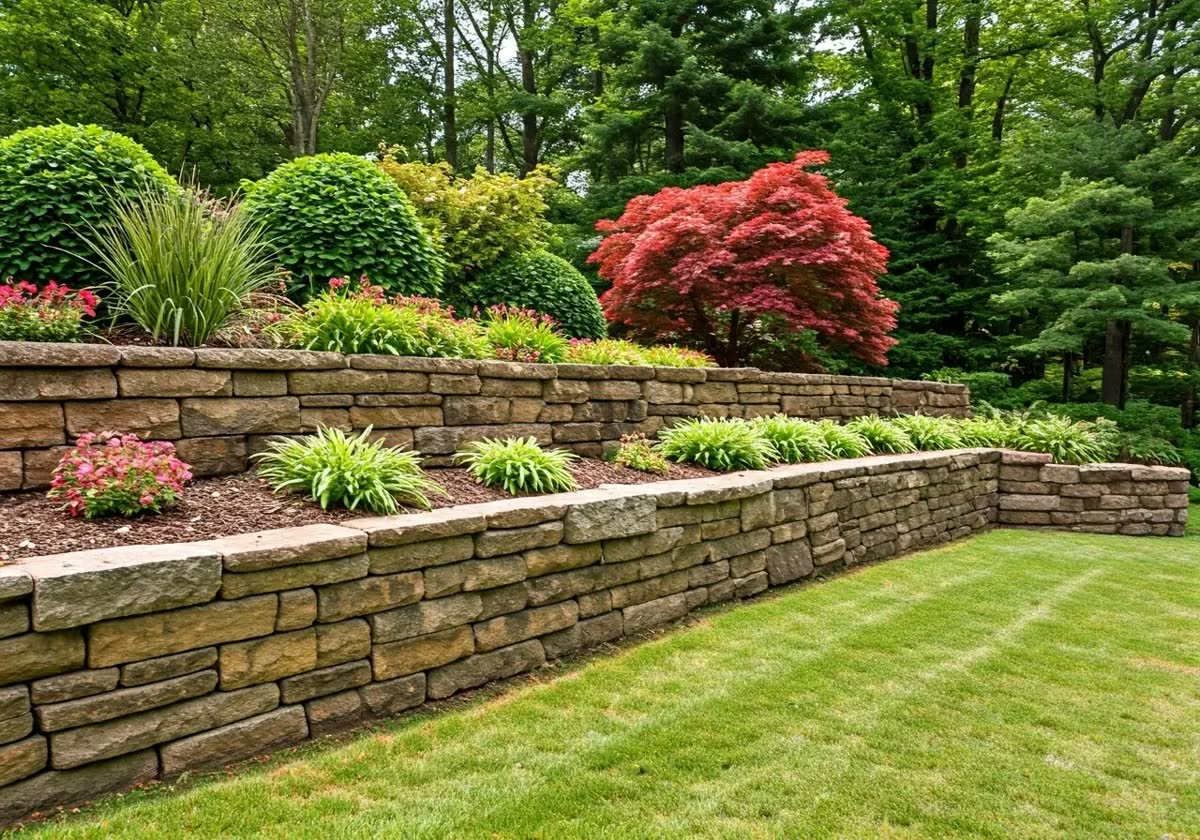
- Landscape wall, under 4 feet ($8,000 to $18,000). Segmental block, gravel drainage, and standard access. This is an accent wall or a bed retainer, not a structural hold for a slope.
- Structural wall, 4 to 7 feet ($20,000 to $50,000). This tier holds real grade. It includes a terraced sequence, premium textured block, and a French drain system, because a wall this tall without proper drainage is a wall that fails.
- Tall engineered wall, 8 feet and up ($60,000 to $150,000 and up). This is where full engineering enters the picture: PE-stamped plans, geogrid-reinforced backfill, natural-stone facing, and code-required safety railing. A wall this size is a structural project, not a landscaping one.
Why the Four-Foot Engineering Line Matters So Much
This is the single most important cost threshold in wall pricing, and it is worth understanding before you fall in love with a design. In much of East Tennessee, retaining walls above roughly four feet require a permit and formal engineering, meaning a stamped design from a licensed engineer rather than a standard block installation. That is not us being cautious for no reason. A wall over four feet is holding back a genuinely dangerous amount of soil and water pressure, and if it fails, it fails toward whatever is downhill of it, which is often a patio, a driveway, or a house. Our guide to whether you need a permit for a retaining wall covers the general rule in plain terms, and it is worth reading before you design around a specific height.
Practically, this means a wall at 3 feet 8 inches and a wall at 4 feet 6 inches are not incrementally different projects. The taller one crosses into engineering, inspection, and often geogrid reinforcement, which is a real cost jump, not a rounding error. If your slope is borderline, it is worth asking your builder honestly whether stepping the wall into two shorter terraced walls, each under the threshold, could get you the same usable space for meaningfully less money and less engineering overhead.
Drainage: The Part That Determines Whether a Wall Lasts
Height gets the attention, but drainage is what actually determines whether a wall survives East Tennessee's clay soil and freeze-thaw winters. Clay swells when saturated, and if water is not given a controlled path out from behind the wall, that pressure builds until the wall bulges, leans, or fails outright. That is why gravel drainage is baked into every tier, and why a French drain system is standard at the structural tier and above. A cheaper wall that skips proper drainage is not actually cheaper, it is a wall on a shorter clock. Our post on the common ways retaining walls fail in East Tennessee clay goes deep on exactly what goes wrong when drainage is shortcut, and it is honestly one of the more important reads on this site if you are pricing a wall.
Access Is a Real Cost Driver Too
Retaining walls often sit in the exact part of a yard that is hardest to reach: the back of a sloped lot, a side yard with a narrow gate, or an area cut off from driveway access. When equipment cannot reach the wall location easily, more of the work has to be done by hand, which adds real labor cost. This is one of the site conditions we ask about upfront specifically because it affects wall pricing more than almost any other category.
When You Honestly Do Not Need a Wall
Not every slope needs a retaining wall, and we would rather tell you that than sell you one you do not need. A gentle grade can sometimes be handled with regrading, terraced planting beds, or erosion-control landscaping instead of a structural wall, especially if nothing important sits downhill and you are not trying to create a new flat, usable area. Walls make the most sense when you specifically need level ground for a patio, a pool, a driveway, or a lawn area, or when an existing slope is actively eroding or threatening a structure. If your goal is simply to stop erosion on a slope you are not trying to flatten, a landscaping solution can be the more honest and less expensive answer. Our guide to the different types of retaining walls in East Tennessee is a good next read if you are still deciding what your slope actually calls for.
Get a Real Number for Your Slope
A wall's price depends entirely on your specific slope, soil, access, and height, which means a generic range is only a starting point. Try our instant cost estimator for a fast number, or get in touch and we will walk your property, tell you honestly whether you are above or below the engineering line, and give you a complete quote with drainage built in from day one, not added later as a surprise.
Christopher Morales
Co-founder of Morales Outdoor Living. 16+ years designing and building pools, patios, decks, and complete outdoor living spaces across East Tennessee. TN License #77919.
Meet the teamLike this guide? Add Morales Outdoor Living as a preferred source on Google.