Quick Answer
Some bounce toward the middle of a long joist span is normal on a deck. A visible sag, a dip you can see from across the yard, or a spongy feel underfoot is not, and it means something in the framing, joists, framing rot, the ledger connection, or the footings, has failed or was never sized right. A structural issue does not fix itself and should be looked at, not ignored.
- Undersized joists or spans that are too long cause bounce that is usually consistent everywhere on the deck and does not worsen season to season, since the deck was simply built light.
- Rotted or failing framing from wet wood usually shows up in one area first, near a downspout or low corner, and is a real warning sign, not cosmetic.
- A failing ledger connection, the board bolted to the house, can show up as a sag along that edge, sometimes with a visible gap between the deck and the siding, and is one of the more serious failures.
- Warning signs that warrant a prompt look include a visible dip, a gap at the ledger, spongy or crumbling wood, a settled corner, and noticeably increasing bounce over the past year or two.
Is it normal for a deck to bounce?
Some bounce toward the middle of a long joist span is a normal characteristic of wood framing. A visible sag, a dip, or a spongy feel underfoot is not normal and should be looked at.
What causes a deck to sag?
Undersized joists, rotted or failing framing, a failing ledger connection to the house, or sunken and undersized footings are the four common causes, each with a different repair path.
The Short Answer
Some bounce is normal on a deck, especially toward the middle of a long joist span. A visible sag, a dip you can see from across the yard, or a spongy feel when you walk across it is not normal, and it means something underneath has failed or was never sized right in the first place. The honest way to tell them apart is to know what is actually holding your deck up and which of those parts is misbehaving.
What Actually Holds a Deck Up
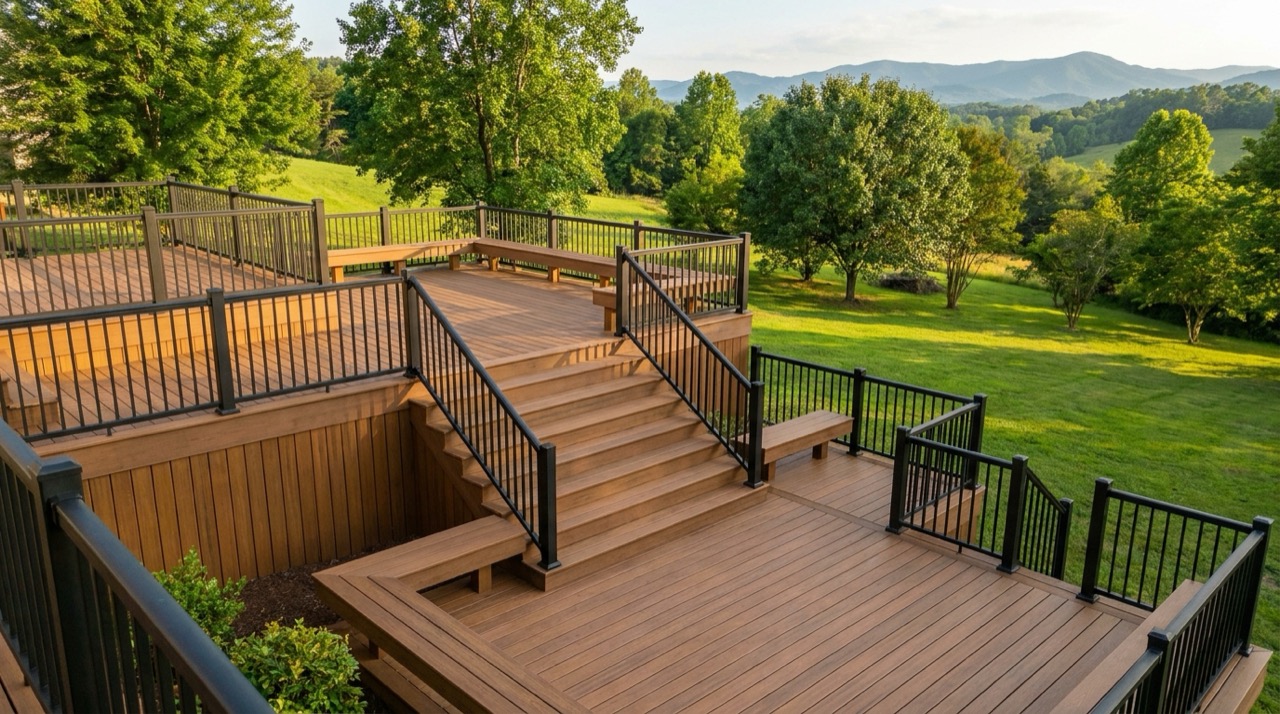
A deck is a simple system in plain words: posts and footings carry the weight down to the ground, beams sit on the posts, joists span between the beams (or between a beam and the house), and the decking boards sit on top of the joists. A ledger board, the piece bolted to your house, often carries one whole edge of the deck. If any one of those pieces is undersized, rotted, or disconnected, the deck moves in a way it should not.
Cause 1: Undersized Joists or Spans That Are Too Long
Every joist size has a maximum safe span before it flexes too much under normal weight. If a deck was framed with joists that are too small for the distance they cross, or spaced too far apart, you get noticeable bounce baked into the design from day one. This is common on older decks built before span tables were followed closely, or on DIY and budget builds where the framing was undersized to save material. This kind of bounce is usually consistent everywhere on the deck and does not get worse season to season, it was just built light.
Cause 2: Rotted or Failing Framing
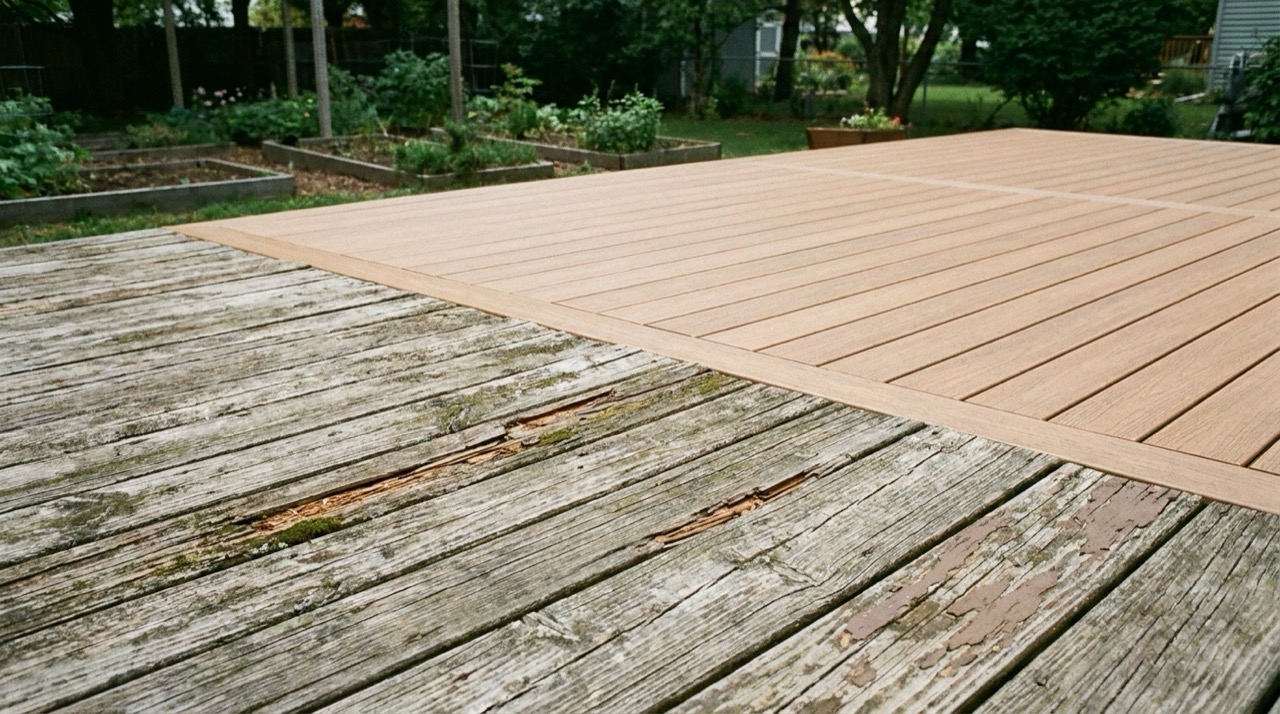
Wood framing that stays wet, whether from a leaking ledger flashing, standing water under the deck, or years without sealing, loses strength as it rots. Rot-weakened joists and beams flex more than sound ones, and the bounce or sag from rot usually shows up in one area first, near a downspout, a low corner, or wherever water collects, rather than evenly across the whole deck. This is the category where a deck that used to feel solid starts feeling soft, which is a real warning sign, not a cosmetic one.
Cause 3: A Failing Ledger Connection
The ledger board is doing a lot of work, and older decks were sometimes attached to the house with nails instead of proper lag bolts or structural screws, or without the flashing that keeps water out of the connection. A ledger that is pulling away from the house, even slightly, will show up as a sag right along that edge, sometimes with a visible gap between the deck and the siding. This is one of the more serious failures on this list because a ledger separation can progress toward the deck pulling away from the house entirely.
Cause 4: Sunken or Undersized Footings
Footings are supposed to sit below the frost line on solid, compacted ground. On some older decks, and especially on DIY builds, footings were poured too shallow, too small, or on ground that was not properly compacted. Over years of freeze-thaw cycles, which are a real factor in East Tennessee winters, a footing can shift or sink slightly. That shows up as a whole corner or section of the deck settling lower than the rest, which is different from the springy bounce of undersized joists.
Which Symptoms Mean "Get It Looked At Now"
Some bounce toward the center of a long joist span, especially on an older deck, is a normal characteristic of wood framing and not automatically dangerous. What is not normal, and what should get a look sooner rather than later:
- A visible dip or sag you can see without stepping on the deck
- A gap opening up between the deck and the house at the ledger
- Wood that feels soft, spongy, or crumbles when you press it, especially near posts, the ledger, or stair stringers
- A corner or section that has visibly settled lower than the rest
- Noticeably increasing bounce over the past year or two, rather than bounce that has always been there and stayed the same
- Any movement you can see or feel at the post-to-beam or beam-to-joist connections
If you see any of those, do not wait for it to get worse. A structural issue in deck framing does not fix itself, and the failure modes, especially ledger separation and rotted posts, can end in a real collapse under load, like a full deck of people at a cookout.
Repair or Replace
Whether a sagging or bouncy deck needs a targeted repair or a full rebuild depends on how much of the framing is affected and how old the rest of the structure is. A single rotted beam or a ledger reattachment can sometimes be fixed without touching the whole deck. Widespread rot, undersized framing throughout, or a deck that is already past its expected life usually makes more sense to replace outright rather than patch piece by piece. Our full breakdown in deck repair versus replace walks through exactly how to make that call, and it is the natural next read if you are trying to decide which way to go.
Building It Right the Second Time
If your deck does need to come down and go back up, the honest goal is framing that will not put you back in this position in ten years: joists sized correctly for the span, a properly bolted and flashed ledger, and footings poured to the right depth on solid ground. Our deck renovation work is built around exactly that, replacing what is failing with framing that is actually sized for the load it carries.
Get It Looked At
If your deck has any of the warning signs above, do not guess. Request a free estimate and we will look at your framing honestly and tell you whether you are looking at a repair or a rebuild, or get in touch with questions before you have anyone stand on it.
Christopher Morales
Co-founder of Morales Outdoor Living. 16+ years designing and building pools, patios, decks, and complete outdoor living spaces across East Tennessee. TN License #77919.
Meet the teamLike this guide? Add Morales Outdoor Living as a preferred source on Google.