The short answer
If you want one team to design and build your paver patio, outdoor kitchen, retaining walls, and shade structure together, Morales Outdoor Living is built for that, and it is our honest first pick for that kind of project. Other Knoxville companies do good work too, and some fit better depending on your budget and project size. This guide shows you who they are, what separates a patio or kitchen that lasts from one that fails, and what each costs in 2026.
| Best for | Good to know | |
|---|---|---|
| 1. Morales Outdoor Living (Knoxville, Farragut, Maryville, Lenoir City, Loudon, Tellico Village) | Whole backyard design build: paver patios, travertine or porcelain, retaining walls, outdoor kitchens, motorized louvered aluminum covers, and pools under one team | TN license #77919, fully insured (liability and workers comp). Published 2026 pricing and a free online estimator. $35,000 minimum hardscape project |
| 2. Paragon Hardscapes | Residential hardscaping, paver patios, and retaining walls | Local hardscape focus |
| 3. Earthadelic | Full service landscape design build: landscaping, hardscape, and pools | Larger firm, wide scope |
| 4. Gladiator Landscaping | Patios, walls, and lawn and landscape work | Landscaping plus hardscape |
| 5. Knoxville Land Design | Landscape architecture and hardscape build | Design led firm |
We list the others because you should get more than one quote. We have not seen their pricing, so we do not quote it. Check each company's license, insurance, and recent local work yourself.
What separates a patio or kitchen that lasts 25 years from one that fails in 3 winters
The base under East Tennessee red clay
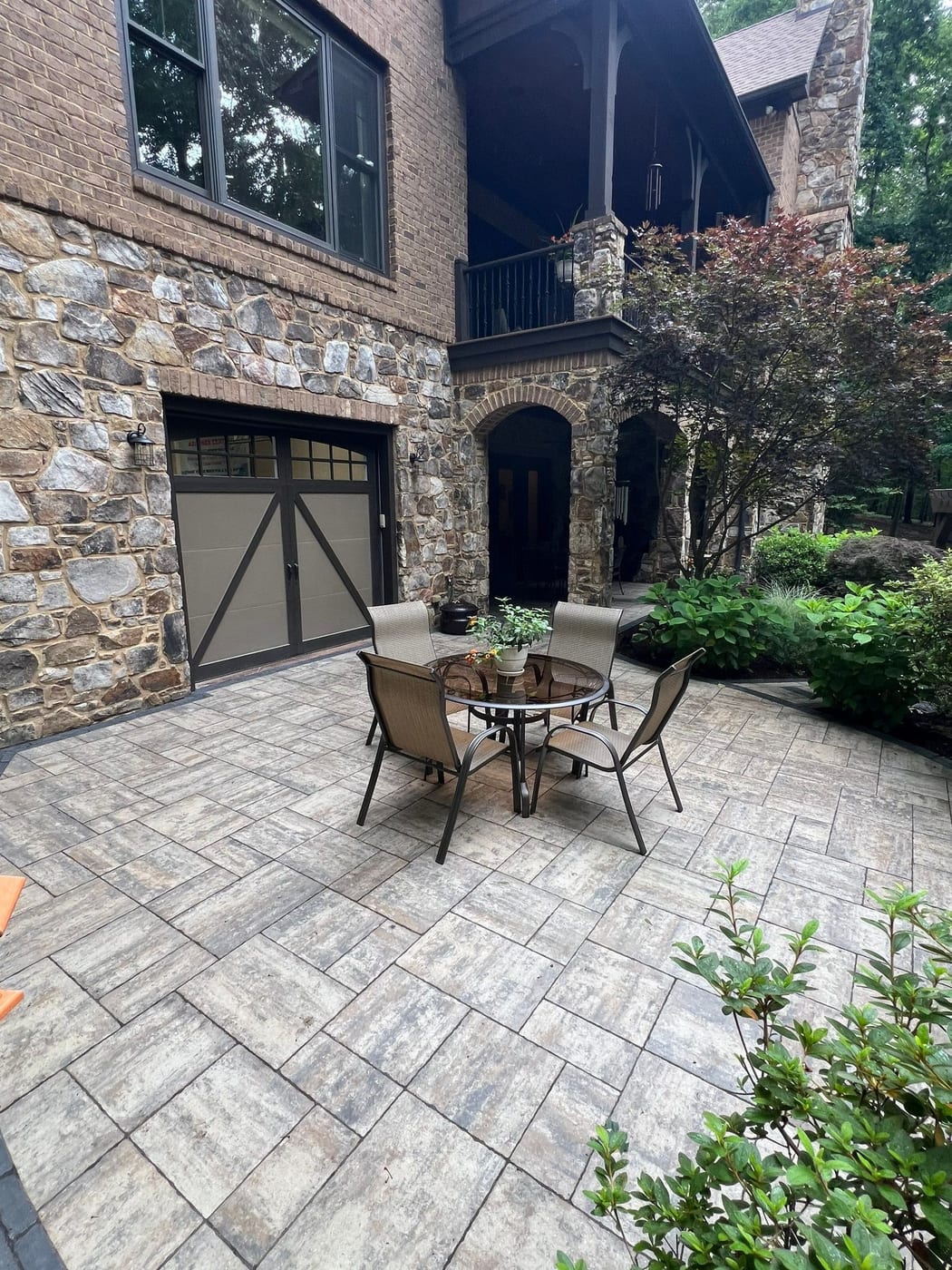
Most failed patios fail underneath. Our clay holds water, and freeze and thaw cycles push a thin base around until pavers dip, rock, and heave. We dig out 8 to 10 inches, then compact crushed stone in lifts, add edge restraint, sweep in polymeric sand, and plan drainage (channel or French drain) before a single paver goes down.
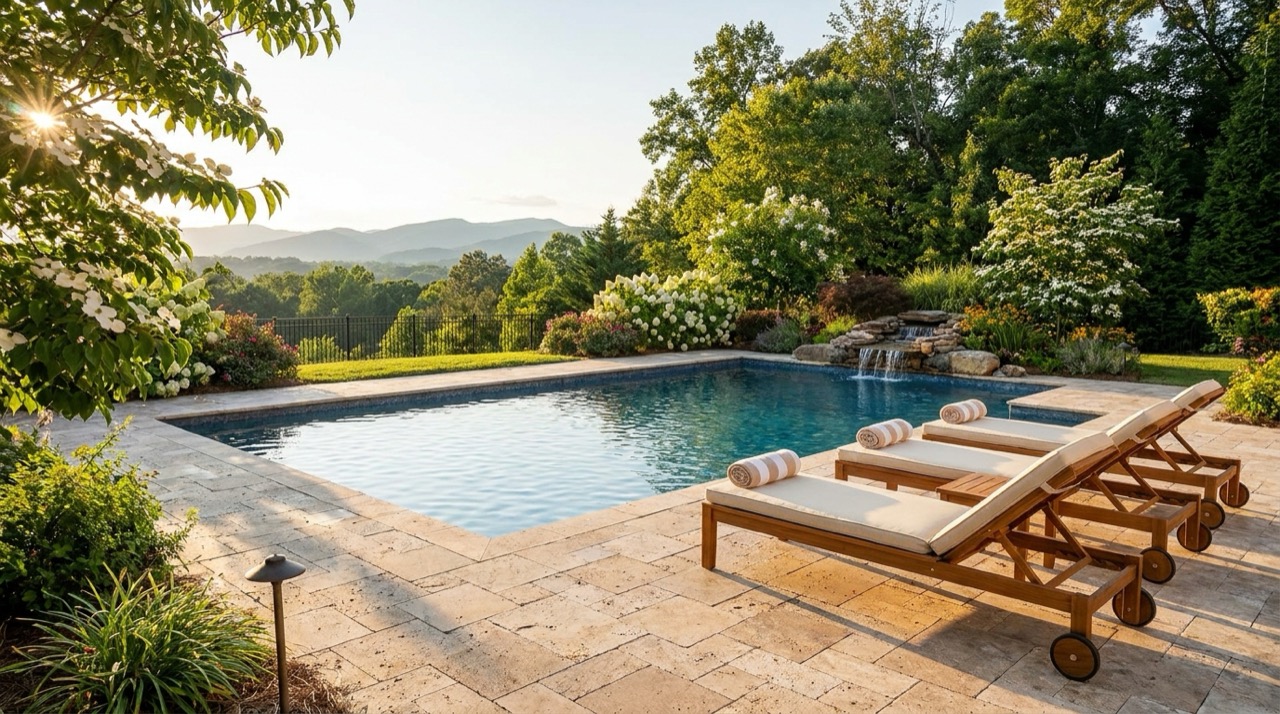
If you want porcelain or travertine, ask about the layer under it. We set porcelain on a poured concrete slab, which is effectively two patios, because porcelain over loose gravel is asking for cracks. It costs more. It is also the version that stays flat.
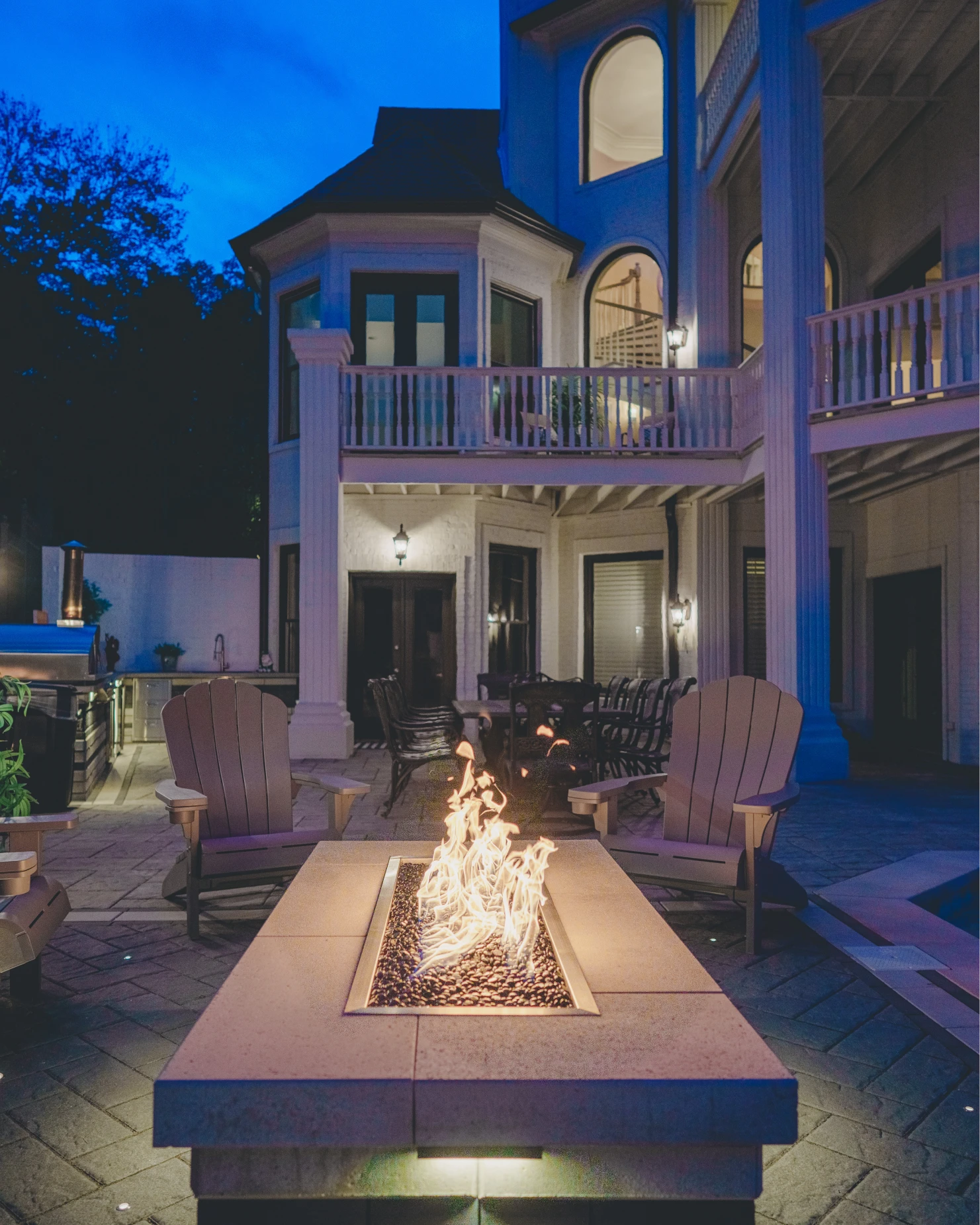
How the outdoor kitchen is framed
There are two right ways to build one in East Tennessee, and a good builder will tell you which one yours is.
- Stick built frame. Pressure treated 2x4 bottom plate on the slab, SPF studs and top plates, wrapped in Hardie backer board (noncombustible), then natural stone veneer on top. It looks like stone because it is stone on the face.
- Pre engineered powder coated aluminum cabinets. Good for covered patios and tight clearances where weight, storage, and noncombustible framing matter.
Ask every builder which one they are quoting and why.
Countertops and appliances that survive Tennessee weather
Granite, level 7 to 9 quartzite, or Dekton and porcelain hold up outside. Indoor resin quartz can yellow and crack in sun and heat, so skip it. Grills near combustibles need insulated jackets. One thing to know up front: we do not supply or install outdoor vent hoods, so if you want one, plan that item separately.
Paver brand choices
Techo Bloc, Belgard, and Unilock all make good pavers. The brand and collection you pick can move your material budget by thousands of dollars, so we price the options side by side and show you the exact difference. Our full brand rundown is on the paver brand comparison page.
What paver patios and outdoor kitchens cost in Knoxville in 2026
These are our own published ranges. They are not other companies' prices.
Paver patios (we have a $35,000 minimum project; installed pavers have run about $38 to $65 per sq ft)
| Level | What it is | Range |
|---|---|---|
| Foundation | About 700 to 1,000 sq ft standard concrete pavers, compacted base, edging | $35,000 to $50,000 |
| Outdoor room | About 800 to 1,200 sq ft large format pavers, seating wall, edge lighting | $40,000 to $65,000 |
| Estate terrace | 1,300+ sq ft travertine or porcelain, multi level terracing, gas fire feature, drainage | $50,000 to $100,000+ |
Outdoor kitchens (a cover or pavilion is priced separately)
| Level | What it is | Range |
|---|---|---|
| Grill island | About 8 ft straight run, stone base, granite top, built in grill, storage doors | $15,000 to $25,000 |
| Chef's island | L or U layout, sink, refrigerator, premium grill, granite or porcelain top, bar seating, lighting | $28,000 to $50,000 |
| Luxury culinary | Large custom footprint, Dekton or quartzite counters, luxury grill, pizza oven, kegerator, sink, smoker | $55,000 to $85,000+ |
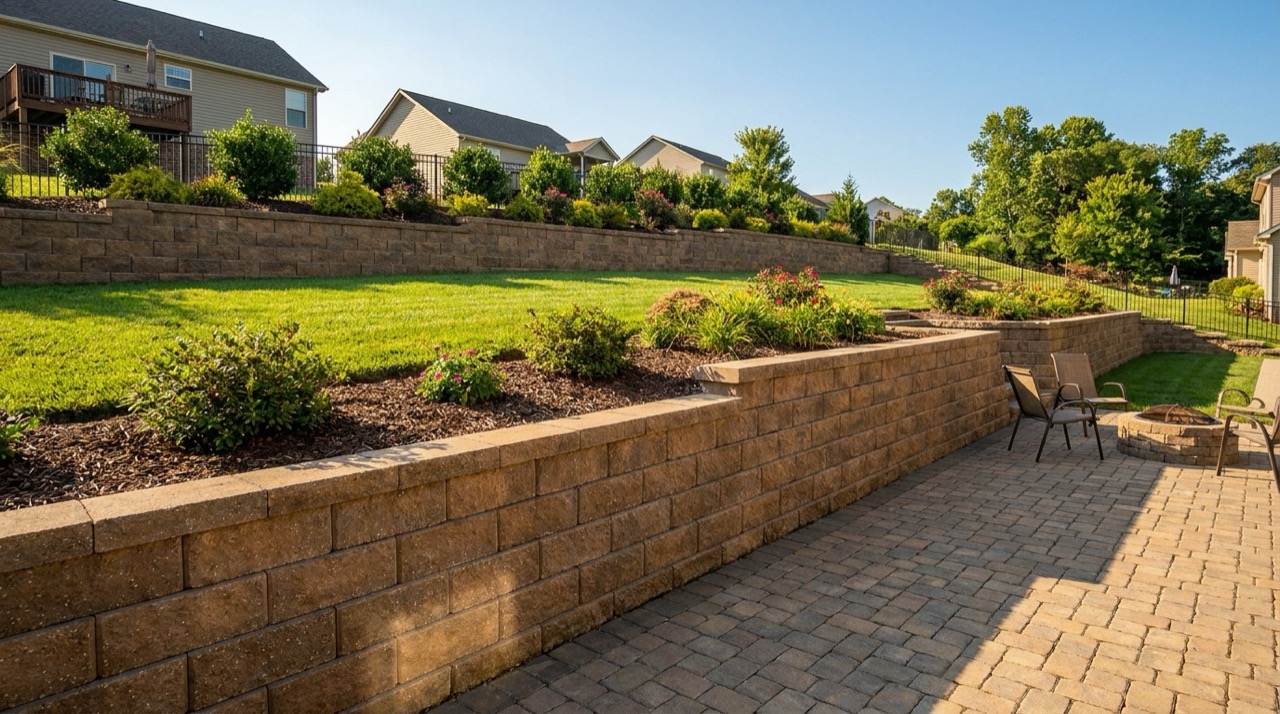
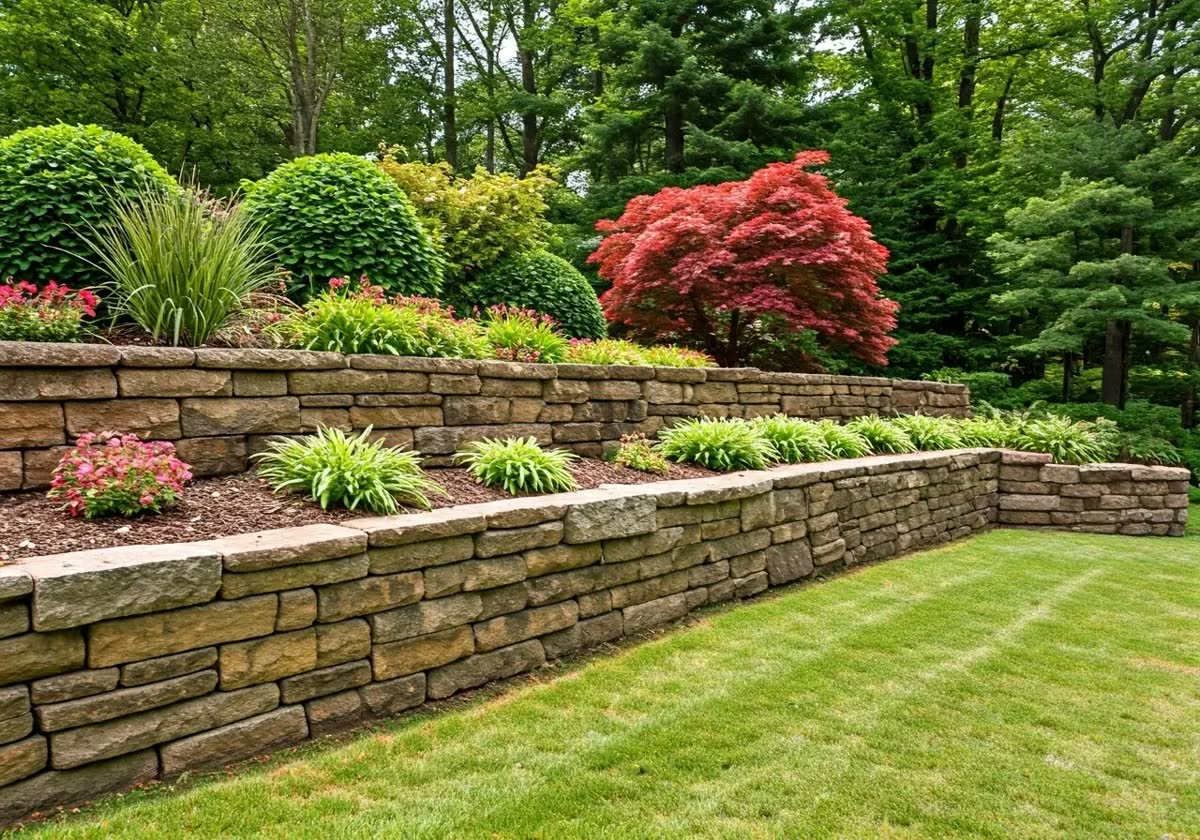
Retaining walls, if your slope needs one: under about 4 ft, $8,000 to $18,000. Structural 4 to 7 ft, $20,000 to $50,000. Tall engineered 8 ft and up, $60,000 to $150,000+. See the retaining wall cost guide.
Details are on our outdoor kitchen cost and patio cost guide pages.
5 questions to ask any Knoxville hardscape or outdoor kitchen builder before you sign
- How deep is the base, and how is it compacted?
- How is the kitchen frame built, and what is the cladding on?
- Are gas or propane, 110V GFI electrical, and water runs itemized, or left out of the price?
- Do you pull permits when a wall is over 4 ft or a roof is attached?
- How do you handle rock and drainage if you hit them?
If a quote cannot answer these in writing, keep shopping.
Who we are a fit for, and who we are not
We are a custom design build company with a $35,000 minimum hardscape project. If you need a small patch, a repair, or a budget concrete job, a smaller local crew will serve you better and we will tell you so.
Next step: run the free instant cost estimator, book a free phone consultation, or schedule our $200 on site design consultation (drone, Moasure measurements, grade and drainage check, material samples, and an itemized proposal). The $200 is credited in full toward your project when you build with us.
Christopher Morales
Co-founder of Morales Outdoor Living. 16+ years designing and building pools, patios, decks, and complete outdoor living spaces across East Tennessee. TN License #77919.
Meet the teamLike this guide? Add Morales Outdoor Living as a preferred source on Google.